


Based on survivor testimonies documented by Amnesty International Kenya.
Like many Kenyan women who migrated abroad each year in search of employment, Katherine (not her real name) believed she could build a brighter future by working as a domestic worker in Saudi Arabia.
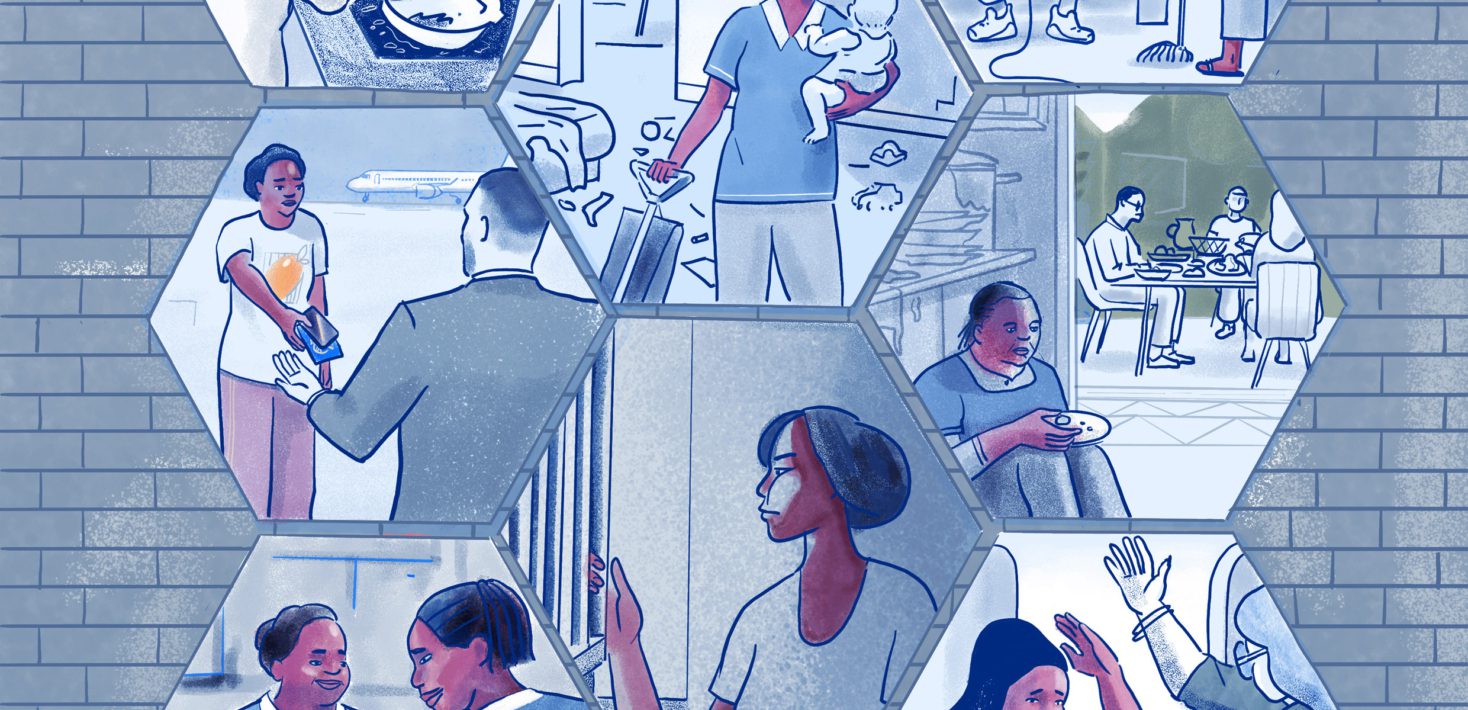
When applying, she was assured of fair wages, fair working hours, and safe and dignified working conditions. However, upon arrival at her new job, the reality she met was very different. After several days, Katherine began to realise that her expectations were far from the reality she encountered and the future she had imagined. She began her days at extremely early hours of the morning, before sunrise, and finished late into the evenings. Katherin was reportedly denied a single day of rest during two years she lived and worked in her employer’s home. She could leave the house only with her rmpolyer’s permission. For Katherine, occasions like this were very rare.
Isolation became just as hard to endure as the long working hours. Her communication with her family became increasingly difficult after her employer sometimes restricted her access to the internet and eventually destroyed her phone, leaving her isolated from those back home. This made it impossible for Katherine to inform anyone about her situation or safety. Instead of finding the opportunity she had been promised, Katherine found herself under constant control and trapped in an abusive working environment. Katherine’s experience reflects the reality faced by many migrant domestic workers who travel abroad hoping for a better life, only to find themselves vulnerable to exploitation. Unfortunately, this is not the only case. All around Kenya, many other women travel to Saudi Arabia in search of what seems to be the beginning of an amazing journey, only for it to end in silence and exploitation.
Across different cities, villages, and towns in Kenya, recruitment agencies advertise various job opportunities that seem too good to turn down. Recruitment agencies often advertise opportunities that promise stable incomes, accommodation and the chance to improve worker’s livelihoods.
For a mother who is unable to feed her child or provide an education, or for a recent graduate struggling to find employment, this appears to be a rare opportunity and offers hope for a better life. For many women, the decision to migrate is driven not by choice alone but by necessity. Financial hardship, unemployment, medical expenses, and the responsibility of supporting their families leaves many feeling they have little alternative but to trust recruitment agents promising a better future. However, for many women, that hope begins to disappear soon after they arrive as the reality of their working conditions becomes clear.
Survivors’ testimonies, investigations carried out by journalists, and reports from international human rights organisations reveal the unsettling truth. The contracts signed before departure are often altered once the women arrive. Their passports are taken away, their salaries are withheld, and many report experiencing physical abuse, sexual abuse, and psychological abuse. Rather than being treated as workers, they are treated as possessions by
their employers. Human trafficking is often misunderstood as involving only abduction or illegal movement of people across borders.In reality, trafficking can also occur when people initially consent to travel but that consent is obtained through deception, false promises or abuse of vulnerability, and is followed by exploitation. A woman may willingly board a plane believing that once she lands, she will begin a completely new life filled with opportunities. She hopes to earn an income and support her family back home.
But once she steps off that plane, those opportunities disappear. Many women become trapped in exploitative conditions, sometimes starved while being forced to work long hours, with no way of communicating with their family or friends. These abuses violate a range of internationally recognised human rights, including the right to just and favourable conditions of work, freedom from forced labour, freedom of movement, and the right to dignity and security of the person.
When domestic workers are overworked, underpaid, or controlled, these rights are clearly being ignored. Many survivors interviewed by Amnesty International also described experiencing racist and degrading treatment. Several survivors reported being subjected to racist insults and degrading language. For example, one survivor reported being called “shaghala”, which means maid/servant, referring to them as that instead of their actual names and being told, “I bought you. You belong to me.”
Due to the nature of domestic work, exploitation is difficult to detect because it mostly occurs in private homes rather than public workplaces. Victims are often isolated and unable to speak the local language, making it difficult to seek help or report abuse. The fear of deportation, retaliation, and financial loss discourages many victims from coming forward.
The governments of both Kenya and Saudi Arabia have introduced protocols to address these issues. Kenya has implemented regulations for recruitment agencies and has occasionally suspended labour migration to Gulf countries. However, Amnesty International’s research indicates that implementation and enforcement remain inadequate, allowing many migrant domestic workers to continue facing exploitation under Saudi Arabia’s kafala (sponsorship) system.
Saudi Arabia has also introduced labour reforms aimed at improving working conditions for migrant workers. However, Amnesty International and other human rights organisations have documented that serious gaps remain in implementation and accountability despite recent labour reforms. Civil society organisations, journalists, and human rights groups have continued to expose these abuses by documenting survivors’ testimonies and carrying out investigations that raise awareness of the issue. Employment overseas can provide valuable opportunities. However, economic desperation should never create an avenue for exploitation. Despite the important role domestic workers play in supporting households and families, many remain insufficiently protected and their work continues to be undervalued. Katherine’s experience is a powerful reminder that this issue goes far beyond one individual’s story. It reflects a wider problem that continues to affect many workers. Greater awareness, stronger legal protections, and real accountability are necessary to ensure that domestic workers are treated fairly, safely, and humanely. Until governments effectively regulate
recruitment, strengthen labour protections, investigate abuse, and ensure access to justice for survivors, many domestic workers will remain at risk of exploitation behind closed doors. Protecting those who care for others is not an act of charity; it is a legal and human rights obligation.