
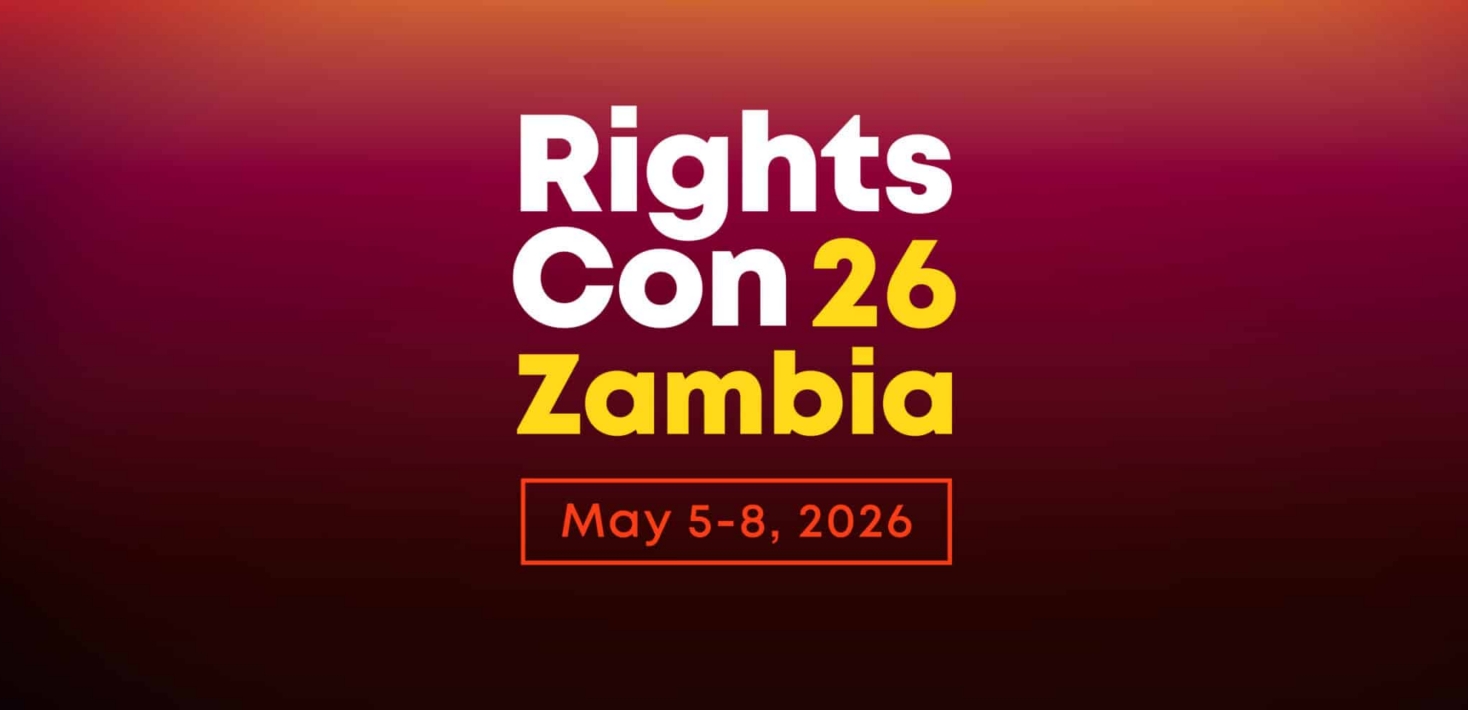


A week before World Press Freedom Day 2026, the Zambian government did something that cut against every word of this year’s theme. Days before RightsCon was scheduled to open in Lusaka on May 5, with thousands of activists, technologists, journalists, and policymakers already en route, the government announced it was postponing the event to ensure “full alignment with Zambia’s national values, policy priorities, and broader public interest considerations.”
There is a name for that kind of language. It is the language of censorship that has learned to wear a suit.
Access Now, the digital rights organization that convenes RightsCon, attempted to negotiate and found no ground to stand on. The conference would “not proceed.”
The cancellation did not happen in a vacuum. Zambia is three months from a general election. President Hichilema, elected in 2021 on a promise of democratic renewal, has spent recent years enacting cyber laws that experts say function as tools of surveillance and speech repression. Freedom House ranks the country “partly free” on its digital rights index.
The theme of World Press Freedom Day 2026 is “Shaping a Future at Peace: Promoting Press Freedom for Human Rights, Development, and Security.” UNESCO chose Lusaka as its global conference host. The Zambian Ministry of Information’s own Facebook page was still advertising the event “back-to-back with RightsCon” while the government worked to cancel it. A government celebrating press freedom on one stage while dismantling it on another; this is hypocrisy by design.
Digital rights are human rights. A future at peace requires that people can speak, that journalists can report, that civil society can gather, and that the internet remains a commons rather than a surveillance trap. When a government demands that a conference on those rights first demonstrate “alignment” with its national values, it is not hosting a conversation but attempting to own one.
The question we must ask is: what does this moment demand of us?
It demands that we see the structure behind this incident. In 2023, 300 participants from Global Majority countries were refused visas when RightsCon was hosted in Costa Rica. Understanding that architecture is not an academic exercise. It is how we stop reacting to each attack in isolation and start building something durable enough to outlast them.
That is what RightsCon represents: a network. A web of relationships and shared language that allows people to know each other, trust each other, and act together. That is precisely what governments fear. And it is precisely what we must protect.
Here is what the Zambian government did not cancel: the relationships. The knowledge. The trust built across time zones and languages. It did not cancel the courage of the Bloggers of Zambia, who condemned the government’s actions immediately and publicly. It did not cancel the people. And the people are still here.
Press freedom should be everyone’s concern. A government that imprisons people for Facebook posts will also intimidate journalists, restrict civil society, and gerrymander elections. The Zambia moment is a call to integration: to build coalitions that connect digital rights to media freedom to election integrity, broad enough and durable enough that no single cancellation can scatter them.
The theme of World Press Freedom Day asks us to shape a future at peace. Peace is not the absence of conflict but the presence of justice. Justice requires the freedom to speak, to organize, to report, to dissent, and with the kind of trajectory we keep witnessing with authoritarian regimes, it will not be given to us. It will be built through the slow, relational, reciprocal work of organizing. Through people who take care of each other. Through movements that do not scatter when they are attacked.
They canceled a conference, but they cannot cancel the movement.