
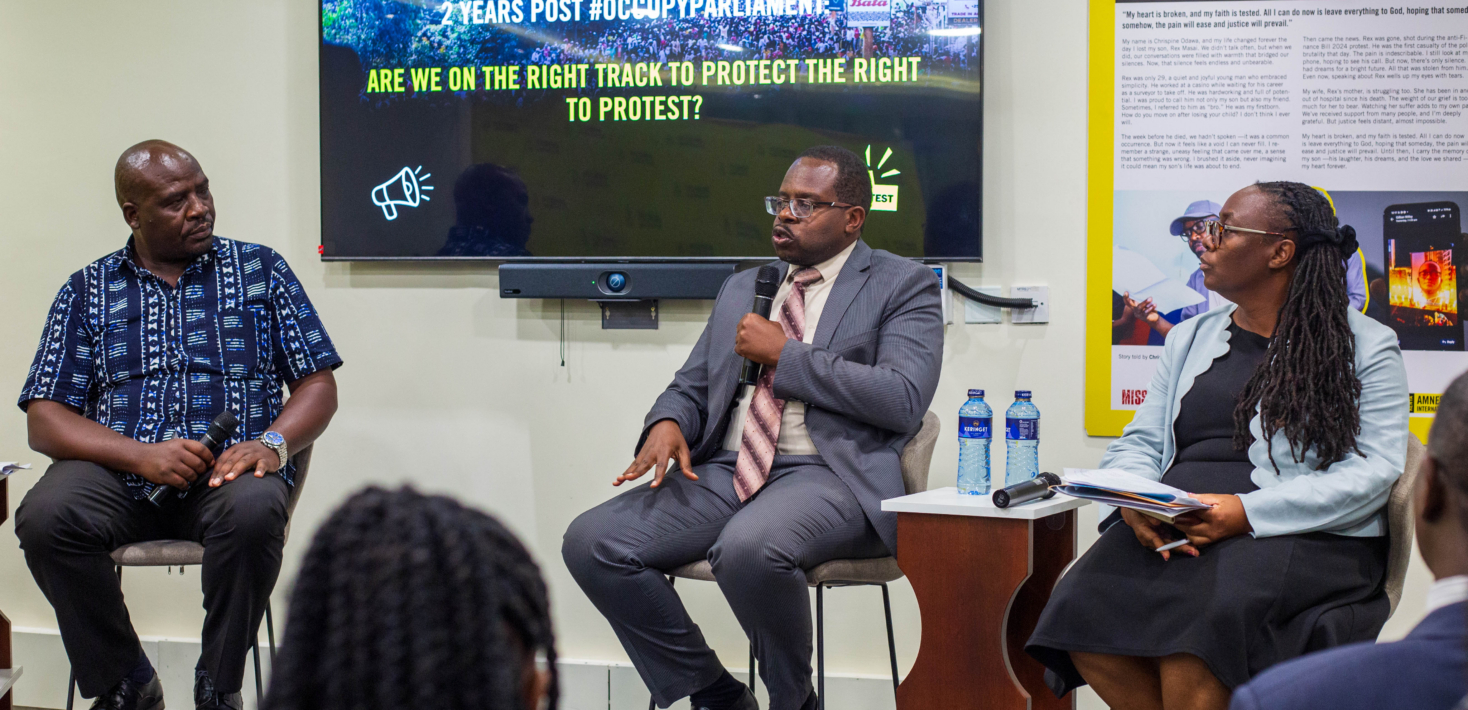


On 5 June 2026, Amnesty International Kenya convened a hybrid Amnesty Kikao under the theme 2 Years Post #OccupyParliament: Are We on the Right Track to Protect the Right to Protest? The discussion brought together human rights defenders, lawyers, civil society actors, students, and members of the public to reflect on the state of the constitutional right to peaceful assembly and protest in Kenya.
Moderated by Amnesty Kenya’s Section Director, George Morara, the panel featured Dr. Annette Mbogo of the Independent Policing Oversight Authority (IPOA) and Charles Kanjama, President of the Law Society of Kenya (LSK). The conversation was framed around Article 37 of the Constitution and assessed whether Kenya has made meaningful progress in strengthening safeguards for peaceful protest following the 2024 Gen Z-led #OccupyParliament demonstrations.
Panelists acknowledged that while important progress has been made, significant challenges remain. Dr. Mbogo highlighted IPOA’s investigation of more than 300 protest-related cases arising from the 2023 and 2024 demonstrations, noting that several files are being finalized for submission to the Office of the Director of Public Prosecutions. She emphasized the need for stronger investigatory capacity, enhanced public trust, and legal reforms that would strengthen accountability, including entrenching command responsibility and clarifying regulations governing public assemblies.
Charles Kanjama reflected on persistent legal and administrative barriers that continue to hinder the exercise of the right to protest. He observed that although spontaneous demonstrations enjoy constitutional protection, planned protests often face procedural hurdles and inconsistent implementation of court decisions. He called for the development of practical guidelines to bridge the gap between constitutional guarantees and realities on the ground, and proposed greater engagement with the judiciary to ensure that bail and bond terms for protest-related arrests remain reasonable and accessible.
The discussion also explored concerns around police conduct during demonstrations, including the use of masks, unmarked vehicles, and the presence of unidentified individuals operating alongside law enforcement officers. Panelists stressed the importance of officer identification, transparency, accountability, and adherence to human rights standards during crowd management operations.
Audience members actively contributed to the conversation, raising concerns about misinformation during protests, internet shutdowns, compensation for victims of protest-related violations, and the burden of high cash bail on arrested protesters. Questions were also raised about the role of the Directorate of Criminal Investigations (DCI) during demonstrations and the need for stronger oversight mechanisms.
A key theme emerging from the discussion was the importance of public education and civic awareness. Participants agreed that citizens require greater access to information on their rights and responsibilities during protests. To this end, the Law Society of Kenya, Amnesty International Kenya, and other civil society partners were called upon to explore developing practical, public-facing guidelines outlining the dos and don’ts of peaceful protest.
The Kikao concluded with a shared recognition that the right to peaceful protest remains a cornerstone of Kenya’s constitutional democracy. While notable steps have been taken toward accountability and reform since #OccupyParliament, participants emphasized that continued collaboration among State institutions, oversight bodies, civil society, and the public will be essential in ensuring that civic space remains open, protected, and accessible to all.
The discussion reaffirmed that protecting the right to protest is not only about safeguarding freedom of assembly but also about strengthening democracy, accountability, and public participation in Kenya’s future.