


Overview
Welcome to this special issue of the Amnesty Kenya Gazette, where we reflect on a year marked by courage and cruelty, resistance and resilience. From the streets and courtrooms of Kenya to regional and global arenas, 2025 reminded us that rights are never freely given; they are claimed, defended, and protected through collective action. In the face of abductions, police brutality, arbitrary arrests, shrinking civic space, and global injustice, Kenyans organised, protested, litigated, created, and stood in solidarity with one another. This issue reflects that journey: the hard truths we confronted, the victories we secured, the lives we lost, and the unwavering resolve that continues to drive the movement forward.
In this issue
- Defending Freedom in a Season of Fear
- Holding Power to Account, Case by Case
- Gen Z Protests, When the State Turned Against Its Own
- When the State Criminalises Dissent
- Defending Rights Beyond Borders
- Young Kenyans Redefining the Online Space
- Celebrating Bold Digital Voices
- Rights Education from the Ground Up
- Youth Taking Their Rightful Place In Global Human Rights Spaces
- Building Africa’s Next Generation of Human Rights Defenders
- Reports and Publications Released in 2025
ACT NOW
STOP TECH-FACILITATED VIOLENCE AGAINST YOUNG ACTIVISTS IN KENYA
State-sponsored digital violence is undermining constitutional freedoms and risks silencing a generation, and X and Safaricom must take steps to ensure that they properly investigate these allegations and implement human rights-compliant policies.
Defending Freedom in a Season of Fear
The year kicked off with the chilling reminder of the shrinking space for dissent in Kenya. Even before January gathered pace, reports of enforced disappearances and arbitrary arrests began to circulate. It was a stark signal: those who speak truth to power, whether on the streets or on X, remain targets of intimidation.
Amnesty International Kenya moved swiftly. When Billy Mwangi, Peter Muteti, Bernard Kavuli, Justus Mtumwa, Martin Mwau, Kalani Mwema, and Steven Kavingo were abducted, and Gabriel Supeet and Naomi (@Jaber_totoo) were arrested, we mobilised our rapid response mechanisms. We joined the Law Society of Kenya and others in urgent court applications, documented violations, amplified citizen alerts, and kept the public informed.
After three relentless weeks of sustained legal pressure, public advocacy, and peaceful protests, Billy, Peter, and Bernard were eventually found alive, disoriented, abandoned kilometres from their homes or the sites of their abduction. Their return was a testament to collective insistence that no Kenyan should vanish without a trace. Sadly, we were horrified by the discovery of the bodies of Justus Mtumwa and Martin Mwau at the Nairobi Funeral Home.
But even as we pushed for their release, another crisis unfolded within our borders. On a quiet Sunday afternoon in Nairobi’s Kilimani neighbourhood, prominent Tanzanian activist Maria Sarungi Tsehai was violently seized by four assailants; manhandled, choked, shoved into a vehicle, and driven toward what we believe was the Kenya–Tanzania border, mirroring the abduction of Ugandan opposition leader Kizza Besigye in Nairobi just months earlier. It was yet another brazen act of transnational repression carried out in broad daylight.
Within minutes of receiving the alert, Amnesty Kenya activated its emergency response. We launched immediate online action, contacted diplomatic partners, and demanded her safe return. The pressure worked. Within hours, Maria was released. We received her, ensured her safety, and connected her to urgent psychosocial support.
Kalani Mwema and Stephen Kavingo’s whereabouts still remain a mystery.
These early days of 2025 underscored a truth we know too well: when rights are attacked, resistance must be immediate, organised, and unafraid.
Holding Power to Account, Case by Case
Across the country, the struggle for justice continues to be long, winding, and too often shaped by delay. Yet it is a struggle we remain firmly committed to; standing with families, survivors, social justice centres, and communities demanding accountability for abuses that span nearly a decade. From Baby Pendo to the Gen Z protests, from enforced disappearances to digital rights violations, our work has remained anchored in a simple belief: every victim deserves truth, justice, and dignity.
On the 2017 post-election violence, we continued to pursue justice for Baby Samantha Pendo and more than 60 other victims and survivors of the Kisumu operations. The journey has been fraught with obstacles. In February 2025, the Court of Appeal issued a stay on plea-taking for senior police officers charged with Baby Pendo’s killing, following claims by the National Police Service and the accused that entering pleas would lead to automatic interdiction. The ODPP and IPOA opposed these attempts, but the result was yet another deferment. In March 2025, the case took another troubling turn. The ODPP dropped charges against eight of the twelve commanders and officers initially implicated. Only four officers eventually took plea before the High Court, facing charges of crimes against humanity, including murder, rape, and torture. To make matters worse, the amended charge sheet was altered without IPOA’s involvement, omitting senior commanders who bore overall responsibility for the Kisumu operations. Equally alarming was the public release of the charge sheet containing the names of victims and witnesses, exposing them to possible harm. The High Court later issued bail conditions barring the accused from entering specific Kisumu estates, Nyalenda, Nyamasaria, Nyawita, Obunga, and Kondele, and ordered the removal of victims’ names from the charge sheet. In September 2025, the Court finally affirmed that the trial must be held in Kisumu, close to survivors, witnesses, and the scenes of the crimes. While this is an important step forward, the broader issue remains: three years since filing, the case has not yet reached trial. Constant adjournments, shifting judges, ten new defence applications, and the DPP’s decision to drop charges have deepened survivors’ fears that justice is being deliberately derailed. Our concern is further compounded by the continued failure to enforce the arrest warrant against Officer Mohamed Baa, who has evaded court for nearly three years. By refusing to allow public display of his photo and failing to secure his arrest, state agencies have undermined survivors’ trust in the justice system. Justice for Baby Pendo demands urgent action: the National Police Service must enforce the warrant, the Judiciary must set firm trial timelines, and the ODPP, IPOA, and Witness Protection Agency must guarantee the safety and participation of victims and witnesses as the trial moves to Kisumu.
Our work has extended beyond the 2017 cases. We were enjoined in the Azimio La Umoja petition in the Kisumu High Court, seeking to hold the Inspector General of Police and the Attorney-General accountable for the killing of more than 70 people during the 2023 protests. Hearings have begun, with oral submissions scheduled for 2026. For many organisations and families, this case is a defining test of whether police commanders can finally be held responsible for unlawful killings.
The inquest into the murder of Rex Kanyike Masai, the first casualty of the 2024 Gen Z protests, also commenced in May. Protesters, police officers, and ballistic experts have testified, with civil society maintaining public pressure to ensure transparency and accountability.
In the Ahmed Rashid case, progress has been obstructed by prosecution witnesses repeatedly failing to appear, leading the court to hold them in contempt. Instead of jail time or fines, the court issued a symbolic sentence requiring them to publicly distribute food and hygiene items to remandees, an unusual remedy that raised serious concerns about the seriousness with which extrajudicial killing cases are treated.
There were, however, rays of hope. The Court acquitted Suleiman and Martin, two young men from Mukuru kwa Njenga, falsely charged with robbery with violence and offensive conduct. Their charges stemmed from the 2021 Mukuru demolitions, widely viewed as forced evictions carried out without consultation or notice and allegedly enforced through police-developer collusion. The failure of prosecution witnesses to appear exposed the fabricated nature of the accusations and reinforced what residents had long argued: these youths were targeted for standing up against unlawful evictions that trampled on the rights to housing, livelihood, and dignity.
Another major victory came with the High Court decision declaring Worldcoin’s operations illegal in Kenya and ordering the deletion of all unlawfully collected biometric data. The ruling is a critical milestone for digital rights and data privacy, reaffirming that innovation cannot be used as an excuse to harvest, commercialise, or exploit the personal data of Kenyans.
Across all these cases, whether in the courtroom, in police stations, or in the streets, our commitment remains unwavering. We stand with victims, we amplify their voices, and we push institutions to uphold the Constitution. The pursuit of justice is long, but we walk it with persistence, solidarity, and hope.
Gen Z Protests, When the State Turned Against Its Own
What began as peaceful, youth-led demonstrations for accountability and better governance quickly descended into chaos, not because of the protesters, but because of the violence unleashed around them. This year’s Gen Z protests took a dangerous turn as hundreds of violent agitators infiltrated the marches, attacking demonstrators and sowing fear across Nairobi.
We documented what many Kenyans had long suspected: the National Police Service failed to stop the organised groups of violent actors who were mobilised, transported, and deployed to patrol streets armed with tyre whips, large wooden batons, and knives. In several cases, we observed police officers consulting with these groups, escorting them through protest zones, and at times directly coordinating their movements.
Some agitators were filmed publicly praising the Nairobi Governor for the support they received, while elected Members of the County Assembly openly defended their unlawful actions. For peaceful protesters seeking to exercise their constitutional rights, this collusion felt like betrayal from the very institutions sworn to protect them.
The situation escalated further with the excessive and unlawful use of force by police officers. We received credible reports of live ammunition fired at civilians, extrajudicial killings, enforced disappearances, and arbitrary arrests. Armed men, suspected to be officers or members of affiliated security units, arrived in unmarked Subaru SUVs without number plates, issuing aggressive commands before indiscriminately shooting at protesters and bystanders.
These actions violated the National Police Service Act, which requires officers to give clear warnings, use less-lethal alternatives, apply force proportionately, and report every use of a firearm to their commanders and to IPOA. Instead, we witnessed a disturbing disregard for both the Constitution and international human rights standards.
As public pressure mounted, a new threat emerged, not on the streets, but in cyberspace. At the height of the 25 June protests, the Communications Authority of Kenya issued a directive to halt live broadcasts of the protests. For 56 million Kenyans, this was an attempt to silence the country in real time. The High Court has since nullified the directive, calling it a misinterpretation of the Constitution and reaffirming that regulating media content is the exclusive mandate of the Media Council of Kenya. The attempt to control information also violated an earlier November 2024 ruling that had declared CA’s interference with TV programming unconstitutional.
By 11 July 2025, the human cost was devastating:
- At least 38 deaths, including the killing of unarmed mask vendor Boniface Kariuki, shot at point-blank range.
- Over 500 people injured, both civilians and police.
- Over 500 arrests, with some charged with terrorism-related offences, murder, robbery with violence, malicious damage to property, theft, and unlawful assembly.
- Punitive bail terms, far exceeding what most could afford.
- An economic loss of approximately KES 1.1 billion.
In response, Amnesty International Kenya issued a public advisory outlining the rights of injured protesters and families who lost loved ones. We stood in solidarity with those unjustly detained, including five protesters who were held for 103 days because they could not afford the KES 100,000 bail imposed on them. Through sustained advocacy alongside partners, their bail was eventually reduced to KES 30,000, enabling them to pursue their right to a fair trial.
Under Kenyan law, bail is a right, not a privilege. It cannot be used to punish people for their poverty or their politics. Bail must reflect both the gravity of the alleged offence and the ability of the accused to pay. The treatment of Gen Z protesters laid bare a justice system that too often relies on fear, financial barriers, and intimidation instead of fairness and due process.
As we continue monitoring the protests and supporting survivors, one message remains clear: the right to protest is not a favour granted by the state, it is a constitutional guarantee. And we will defend it.
ACT NOW
Kenya: Security services must respect fundamental rights during nationwide protests
Amnesty International reminds the law enforcement and military officials of the 28 June 2024 High Court ruling in Malindi, which issued temporary orders preventing security agencies from using lethal and other less-lethal ammunition
When the State Criminalises Dissent
This year also saw a troubling rise in arbitrary arrests, a reminder that the struggle for freedom of expression and civic participation in Kenya remains far from over. Time and again, ordinary citizens, creatives, technologists, and activists found themselves targeted not for breaking the law, but for daring to question power.
In May, we condemned the arrest of independent film producers Nicholas Gichuki, Brian Adagala, Mark Karubiu, and Chris Wamae, alongside the seizure of their equipment, after they were accused of involvement in the BBC’s Blood Parliament documentary. That this crackdown occurred on the eve of World Press Freedom Day was not only ironic, but it was also alarming. These arrests violated the rights to expression (Article 33), freedom of the media (Article 34), and the protections enshrined in the African Charter on Human and Peoples’ Rights, the Universal Declaration of Human Rights, and the ICCPR.
Even more troubling was that the arrests came only two days after the Attorney-General, speaking before the Human Rights Council in Geneva, had reaffirmed the Government’s commitment to uphold human rights during Kenya’s Universal Periodic Review. The four producers were later released on free bond, and we continue to accompany them through the legal process as they fight to clear their names.
But not every arbitrary arrest ended in freedom. One ended in death.
In June, Kenya mourned Albert Ojwang, who died in police custody at the Central Police Station in Nairobi. Albert had been arrested in Homa Bay for allegedly sharing “false information” about a senior police official on social media. Within days, he was dead. The police attempted to claim suicide. An autopsy told the truth: severe head injuries, neck compression, and multiple soft tissue trauma, clear signs of torture.
Outrage spread across the country under the hashtag #JusticeForAlbertOjwang, demanding accountability. Six officers, including the OCS Samson Talaam, were later charged with murder. They pleaded not guilty and were denied bail. The case remains active in court, and we continue to monitor it closely.
We condemned Albert’s killing in the strongest terms. No Kenyan should lose their life in police custody. To be detained by the State should never be a death sentence. Police officers carry not only legal authority, but a profound moral duty: to protect the lives and dignity of every person in their care.
From filmmakers to coders to everyday citizens, these arrests remind us that dissent is not a crime. And as long as arbitrary arrests continue, so will our resolve to challenge them—fearlessly, publicly, and with unwavering solidarity.
Another case that underscored the shrinking civic space was the arrest of Rose Njeri, a software engineer whose only “offence” was building Civic Email, a simple digital tool enabling Kenyans to directly communicate their views to lawmakers during public participation on the Finance Bill 2025. Rose used her skills to help citizens push back against punitive tax proposals and the disturbing plan to grant the Kenya Revenue Authority access to private financial data, including M-Pesa transactions.
The State responded with brute force. Her home was raided, her devices seized, and she was arrested on a Friday, then held through the long Madaraka Day weekend. She was denied access to a lawyer, denied bail, and held for more than 88 hours, despite the Constitution being crystal clear on the rights of arrested persons under Article 49: the right to know the reason for arrest, to communicate with counsel, to access medical care, and to be brought to court within 24 hours.
Under Article 50, she was also entitled to a fair trial, to be presumed innocent, and to counsel of her choice. Yet attempts by her lawyers to reach police officers or their superiors went unanswered.
When she was finally presented in court, the charges were dismissed outright. The magistrate ruled that the allegations did not disclose any offence. Rose walked free and then walked onto the global stage: she was named to the TIME100 Next 2025, becoming the sixth Kenyan to receive this honour. We proudly supported her travel to New York to receive the award. Her recognition is not only a celebration of her brilliance, courage, and civic imagination, it is a victory for every Kenyan who believes that technology can strengthen democracy, not threaten it.
Our Relentless Pursuit of Justice
Our struggle for human rights does not stop at Kenya’s borders. This year, Amnesty International Kenya deepened its global solidarity work, standing with victims of repression across the region and raising Kenya’s voice in defence of international justice.
On Uganda, we issued urgent statements and mobilised petitions demanding the release of Dr. Kizza Besigye, Hajj Obeid Lutale, Eron Kiiza, and others unlawfully detained. These actions were backed by peaceful protests and the submission of joint petitions to the National Assembly Departmental Committee on Defence, Intelligence and Foreign Relations, calling for transparency on the concrete measures being taken to end abductions, renditions, and cross-border repression on Kenyan soil.
Our collective pressure, alongside families, civil society partners, and regional allies, yielded results. Eron Kiiza was released, followed later by the release of Bob Njagi and Nicholas Oyoo, who had been abducted and detained by Ugandan authorities for over 38 days.
While these releases were a relief, they also reinforced a hard truth: abductions and renditions are becoming a preferred tool of repression in East Africa, and silence only emboldens perpetrators. We will continue to resist any attempt to normalise them.
Beyond the region, we stood firmly on the side of humanity under the banner of #FreeGaza. Together with Kenyans across the country, we spoke out against the ongoing catastrophe in Gaza and the Occupied Palestinian Territories, making it clear that the time has come to dismantle the political and economic systems that enable Israel’s crimes. We demanded an end to the genocide in Gaza, the unlawful occupation, and the apartheid system that denies Palestinians their most basic rights.
We called on the Kenyan Government to move beyond cautious diplomacy and issue clear, principled statements condemning all violations of international law in Gaza and the occupied Palestinian territories. We urged Kenya’s missions in New York and Geneva to consistently vote in favour of United Nations resolutions demanding an immediate end to hostilities, the protection of civilians, accountability for war crimes, and the realisation of a just and lasting two-state solution.
At the continental level, we pressed Kenya’s Addis Ababa Mission to work with the African Union, the Arab League, and global partners to build a unified African position, one that unequivocally supports Palestinian self-determination and the sustainable implementation of the two-state solution.
In a world where repression increasingly crosses borders, our response must do the same. From Kampala to Gaza, our message remains clear: human rights are universal, and solidarity is our strongest defence.
ACT NOW
Justice for Eugine
Eugine was an only child. He was killed during violent policing of a school unrest. He died in a place where he should have felt safe
Young Kenyans Redefining the Online Space
On the digital rights front, young Kenyans are leading transformative campaigns to make the internet safer, fairer, and more accessible. In Nairobi, the Privacy First Campaigners launched Jua Terms, urging companies to simplify punitive online Terms and Conditions so users can truly understand what they are agreeing to before clicking “I agree.” Meanwhile, in Mombasa, the Scroll Bila Troll campaign tackles cyberbullying, responding to a survey showing that 78% of young people aged 18–25 have experienced or witnessed online harassment. Both campaigns aim to foster online spaces that are transparent, safe, and empowering.
Amnesty International Kenya also co-hosted a Data Governance Research Day at Strathmore University, alongside CIPIT and the Data Privacy and Governance Society of Kenya (DPGSK). The session explored how to harness data responsibly while protecting dignity and privacy, emphasizing the need for systems that serve not just efficiency and profit, but the public good. Scholars, regulators, practitioners, and advocates examined ways to ensure that data governance strengthens equity, accountability, and human rights in the digital age.
Finally, through the Digital Consent General Assembly, young people actively debated ethical consent, drafted youth resolutions, and proposed creative alternatives such as icon-based and layered privacy notices. Their work demonstrates that digital rights are not abstract concepts — they shape freedom, safety, and participation online. Kenya’s youth are already taking the lead, reimagining the digital world to be more inclusive, ethical, and human-centred.
Celebrating Bold Digital Voices
September began on a high note with the celebration of this year’s Digital Rights Essay Competition winners. The competition drew in over 1,000 young changemakers from 45 Human Rights Friendly Schools across the country, each lending their voice to the future of human rights online. Writing under the theme “The Internet We Want”, students envisioned a digital space where governments, tech companies, and communities collaborate to build an inclusive, safe, and rights-respecting online future for all. Their ideas reflected not just creativity, but also courage—proof that Kenya’s next generation is ready to lead the digital rights conversation.
From Kisii to Kajiado, Homabay to Kiambu, the very best of these voices stood out. The winners per region were: Frazier Achieng Obarah (Lake Junior School – Homabay), Ariana Mildred (Noonkiprir Girls Secondary – Kajiado), Kwamboka Joan (Suneka Girls – Kisii), Carilus Akede (St. Johns Masawa Junior – Kisumu), Perpetua Nyaboke Ombati (Nyabururu Girls High School – Nyamira), Enock Kipyegon Rotich (Kabianga School – Rift Valley), and Esperenza Hope Mbone (Senior Chief Koinange Girls – Kiambu). Each of them carried forward a message of hope: that the internet can—and must—be a place where rights thrive, not where they are eroded.


Rights Education from the Ground Up
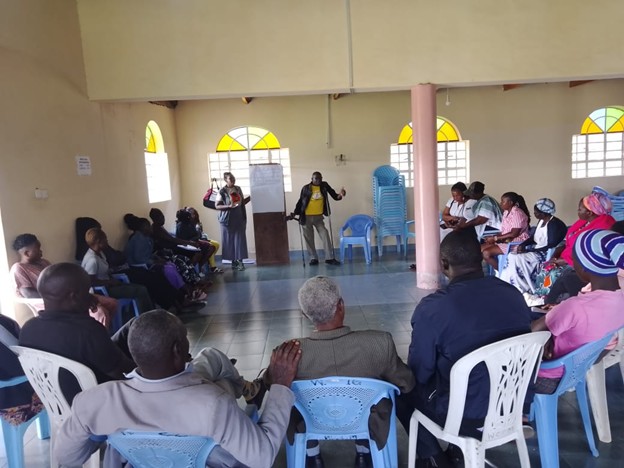
Across the country, our Circles of Conscience (CoCs) continued to prove that human rights education is most powerful when it is rooted in community, spoken in familiar language, and led by people who understand local realities.
From Jowi FM in Kisumu to Milambo FM in Migori, CoC members took to the airwaves, breaking down complex human rights issues into conversations that made sense in everyday life. Listeners tuned in to discussions on community policing, access to justice, corruption and accountability—and even the often-mystifying Public Finance Management Cycle, which, thanks to our teams, now sounds far less like rocket science and far more like something ordinary citizens can actually engage with.
On 13 October, Milambo FM hosted the Amnesty Migori Chapter for a deep dive into the county budget process, the County Government Act, and the Public Participation Act. It was a powerful reminder that rights education does not have to be technical or intimidating—it just needs a microphone, lived experience, and people who care enough to explain.
Beyond radio, CoC members quite literally hit the ground, convening community forums to tackle urgent local issues. Gender-Based Violence (GBV) emerged as a key focus area. CoCs in Nakuru and Nyeri ran successful GBV awareness campaigns, creating safe spaces for dialogue while also recruiting new members committed to ending violence in their communities.
In Kisumu, the Oversight Committee rolled out initiatives aimed at strengthening rights-based community policing, working to rebuild public trust in security systems that have too often failed the people they are meant to serve. In Trans Nzoia, Amnesty brought together human rights stakeholders from across the county to develop a referral pathway for victims of human rights violations, ensuring survivors know where to go and who can support them.
Meanwhile, CoCs in Nandi, Elgeyo Marakwet, and Uasin Gishu took direct action on pressing human rights cases. In Nandi County, members worked closely with the media to spotlight the abduction of a newborn from a hospital—demonstrating the power of rapid community response and public accountability.
In Uasin Gishu, CoC leadership translated into broader civic influence. Members took over key roles within the CSO network, with four CoC members elected into leadership positions, including Chairperson Benedine Kipruto, a testament to the credibility, trust, and organising power of grassroots human rights leadership.
From radio studios to village halls, from policy conversations to emergency response, our CoCs continue to show that human rights are not abstract ideas; they are daily conversations, collective action, and community courage in motion.
Youth Taking Their Rightful Place In Global Human Rights Spaces
If 2025 proved anything, it is this: young people are not waiting their turn. They are organising, speaking, shaping policy, and taking their rightful place at decision-making tables—locally, regionally, and globally.
Through our Rights Click programme, Faith Katumbi, one of Amnesty Kenya’s Digital Rights Champions, represented Kenyan and African youth at the European Youth Meeting in Sweden. There, she joined critical conversations on civic freedoms, digital governance, and online safety—issues that define the lived realities of young people today. Faith also engaged directly with Mary Lawlor, the UN Special Rapporteur on Human Rights Defenders, bringing youth voices into spaces where global standards are shaped. It was a powerful reminder that age is no barrier to influence when conviction meets opportunity.
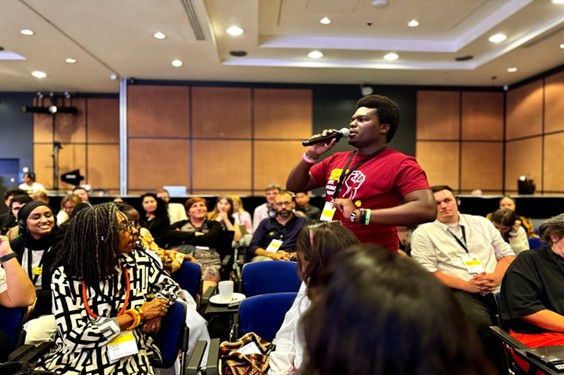
Closer to Amnesty’s governance spaces, Anthony Akollo, an Amnesty International Kenya Board Member, served as the youth delegate within Amnesty’s regional and global decision-making structures. He reviewed motions ahead of the General Assembly and ensured that youth perspectives informed the organisation’s human rights priorities. In doing so, he sent a clear message: young people are not just observers of power—they are participants, contributors, and accountability partners.
Leadership also emerged early and boldly. Movet Okello of Sinyolo Girls was selected to join the Digital Child Rights Advisory Committee, affirming that advocacy and leadership can begin long before formal titles—or even KCSE results—arrive. Her selection signals growing recognition that children and young people must be heard on digital policies that affect their safety, privacy, and freedom.
Across continents and institutions, Kenyan youth are stepping forward with clarity and courage. They are defending rights online and offline, shaping policy, and redefining what leadership looks like. In 2025, one thing is certain: the movement is young—and it is already leading.

Building Africa’s Next Generation of Human Rights Defenders
From 4 November to 10 December 2025, Amnesty International hosted the first-ever Regional Human Rights Campaigners Training, a six-week virtual programme co-hosted by Amnesty Kenya, Zimbabwe, Ghana, Nigeria, and South Africa. The response was overwhelming: nearly 3,000 applicants from across 22 African countries expressed interest, proving that the continent is ready and eager to organise for justice.
The training tackled some of Africa’s most urgent human rights challenges: shrinking civic space, disinformation, economic justice, gender inequality, and the enduring legacies of colonialism. Each week, a different Amnesty Section led the conversation, bringing its unique expertise and perspective. Participants developed resilience strategies, intersectional analysis maps, organising plans, and decolonising commitments, all tailored to the realities of their local communities.
And yes, there was fun, too. Trivia games, energisers, and cross-border peer learning kept spirits high because even human rights defenders need moments to laugh, connect, and recharge.
As the inaugural cohort graduates, they carry more than skills: they carry solidarity, confidence, and a renewed sense of purpose. This training marks the beginning of a more connected, resilient, Africa-led community of human rights campaigners, ready to defend rights, challenge oppression, and shape the continent’s future—today.
Reports and Publications Released in 2025
- CTRL+Speak II: A Human Rights Magazine for Human Rights Friendly Schools
- “This Fear, Everyone is Feeling It”: Tech-Facilitated Violence Against Young Activists in Kenya
- Technology and Human Rights Quarterly Digest – Q3 2025
- 5 Years On: Citizens’ Perspective on Kenya’s Data Protection Act Implementation
- Technology and Human Rights Quarterly Digest – Q2 2025
- Wamefungiwa, Wametengwa: Maisha Yaliyofichwa Ya Wafanyikazi wa Nyumbani Kutoka Kenya Wanaofanya Kazi Nchini Saudi Arabia
- Locked In, Left Out: The Hidden Lives of Kenyan Domestic Workers in Saudi Arabia
- Missing Voices Annual Report 2024: Brutal Policing
- The State of the World’s Human Rights
- 2024 Annual Report: Still Here
- Lest we Forget I
As we close this Year in Review, one truth stands unshaken: the struggle for human rights in Kenya is far from over, but neither is our resistance. This year laid bare the cost of silence and the price of courage. We witnessed the state test the limits of power, and we saw ordinary people push back, on the streets, in courtrooms, on radio waves, in code, in classrooms, and across borders. Some paid with their freedom. Some paid with their lives. Their stories now carry a responsibility that belongs to all of us.
What sustained the movement in the face of fear was solidarity, messy, loud, imperfect, and deeply human. It showed up in families refusing to stop searching, in youth who organised anyway, in communities that chose care over despair, and in defenders who kept going even when justice felt deliberately out of reach. Every release secured, every charge dismissed, every life defended was a reminder that power concedes nothing without pressure.
As we step into the year ahead, we do so with clarity and resolve. Human rights are not seasonal. Accountability cannot wait. Dissent is not a crime. We will continue to document, to mobilise, to litigate, to educate, and to stand with those most at risk, because the cost of doing nothing is far greater than the cost of resistance.
To every member, supporter, activist, survivor, and partner who walked this road with us: this movement is yours. The work continues. The struggle continues. And together, we continue.
