


Let’s be honest.
When people hear ‘human rights ,’ they don’t immediately think ‘cool.’
They think it’s serious. They think professional. They think of lawyers or law students. They think policy heavy. They think formal. Often, we forget that human rights organizations exist to protect the rights and dignity of everyone, regardless of their background. To achieve a just world, we must create space for the involvement of all, the very people for whom the organizations exist: The People.
This is what makes us a ‘Movement’.
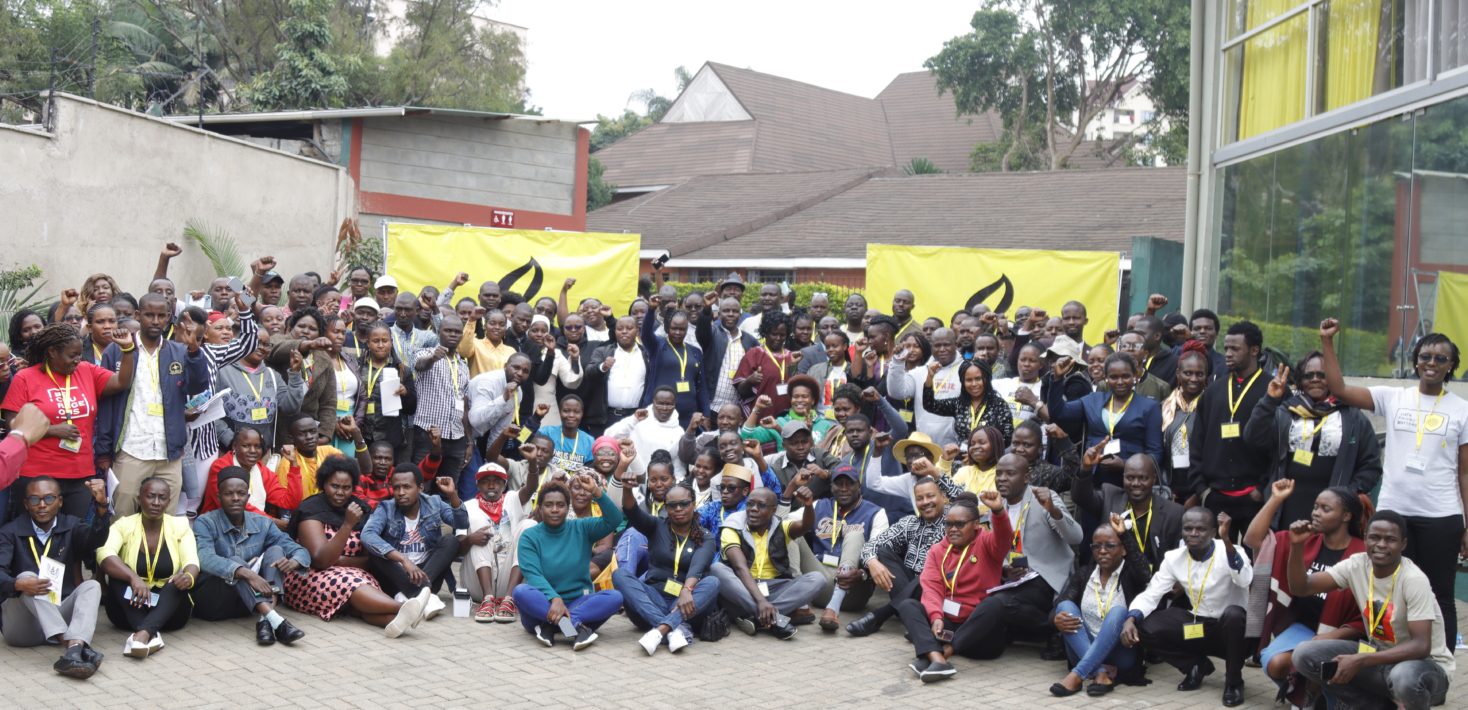
For Amnesty International, membership is the heartbeat of the Movement. With over 7 million members and supporters globally, it is not just an organization that researches and campaigns for the promotion and protection of rights; it puts the people at the forefront, empowering them to take action. Through the membership program, Amnesty brings together people to learn, engage, and actively participate in human rights action at the grassroots level.
At Amnesty Kenya, membership starts from 12 years, with Junior members (ages 12-17 years), starting their journey as young human rights defenders, learning the foundations of human rights through fun and engaging informal learning activities. These activities expose them to the realities of human rights at a very young age and teach responsible citizenship. Junior members write letters of solidarity to individuals who have been wrongfully incarcerated, to families of those facing unfair trials and to duty bearers and policy makers who hold power. These activities lay the foundation for active citizenship and instill the conviction to stand for a cause.
Adult members (18 years and above) join through the individual membership category, where they participate in the Movement in various ways. Others are organised into Community and University Chapters, now spread across 35 counties in Kenya. These chapters are collectively known as Circles of Consience, commonly COCs, and they comprise of Amnesty Kenya members who organize locally and campaign for the promotion and protection of the rights of all. Members learn, engage, and campaign using both formal and informal approaches to address human rights issues.
Standing up for dignity, freedom and justice has always been cool. Whether it’s environmental rights, the right to education, digital rights or freedom of Maandamano. Taking a stand matters.
Look at Wangari Maathai and the tremendous impact and legacy she left by standing for ‘something’, through simple acts of advocacy and activism, leading to such a profound and important outcome!
Or consider the “The People Shall” ambassador video during the NADCO public participation, which constantly reminds us of the weight of Article 1 of our Constitution — the article that grants sovereign power to the people. That simple phrase helped propel people-powered action in 2024.
How cool is it that a statement so simple, casually captioned by an ordinary mwananchi during a public participation exercise, could inspire understanding, mobilize action, and drive meaningful change during such a critical moment in the country?
Again, the power of active citizenship!
But here’s the truth, ‘Silence is not Neutral’.
And right now, in Kenya and across the world, it’s never been more urgent to stand for something by not staying silent and standing for a cause:
Because Human Rights Can’t Wait :
When someone is arrested or incarcerated unfairly, every hour matters.
When people are silenced, their voices do not come back on their own. It is the call for accountability that piles pressure on the duty bearers to enact the law.
When Rex Maasai’s family is seeking answers, waiting only deepens the pain. And so, when we stand in solidarity with the family, we propel action for the perpetrators to be brought to justice.
Because Abuse Happens in Isolation :
Abuse often not only happens where there is isolation, but it also survives where there is lack of information.
When people do not know their rights, violations are easier to justify.
When communities are unaware of legal protections, accountability becomes harder to demand.
When individuals feel unsure about what the law says, they may doubt their own experiences and give in to an injustice.
Knowledge changes that.
Joining a movement like Amnesty Kenya provides access to learning spaces, discussions campaigns and collective advocacy that deepen civic awareness as we believe that informed citizens are empowered citizens.
Because you don’t need to be an expert:
You don’t need to be an expert.
You don’t need a title.
You just need to care and stand for something. Our values, our principles and believe in human dignity.
Because we take Injustice personally:
At Amnesty International Kenya, we believe that an injustice to one is an injustice to all.
Remember the story of Albert Ojwang’, the 30-year-old school teacher who died mysteriously in a police cell. That hit hard! Now that rage and quest for justice that turned every Kenyan to demand for accountability and justice is the momentum with which we hold every injustice that happens around and so should you. Because yesterday it was Albert Ojwang, Rex Maasai, Nicholas Oyoo, tomorrow it might be somebody else or even yourself. Who will stand in the gap?
Because change needs you:
Revolutions are not built only in courtrooms or boardrooms, nor are they built in labs by experts or the elite. They are built in small, consistent acts of courage.
Sometimes change begins with a conversation or an idea. Think of Hanifa, a young Kenyan activist who changed perceptions and renewed public trust when she meticulously opened a paybill to collect money for protest victims and ended up handling over Ksh. 20 million in public money donated by Kenyans of goodwill towards the June 2024 Protests, fully accounting for it.
Sometimes it begins with sharing verified information or with a single post that challenges misinformation.
Sometimes it begins with someone choosing to care and deliberately taking action to stand for human rights and those who have faced injustice.
Sometimes it begins with choosing to be an active citizen by being actively involved in the governance of one’s country and how this affects livelihoods.
Eventually, every sacrifice and small act we put into ensuring we enjoy a just world will have fair consequences for us and for the generations to come.
If you believe that every small action matters, then there’s a place for you in this Movement because when rights are protected, societies thrive. Welcome to the Amnesty Kenya Movement!
Eunice Obath is Amnesty International Kenya Movement Growth Officer and writes in her personal capacity.