

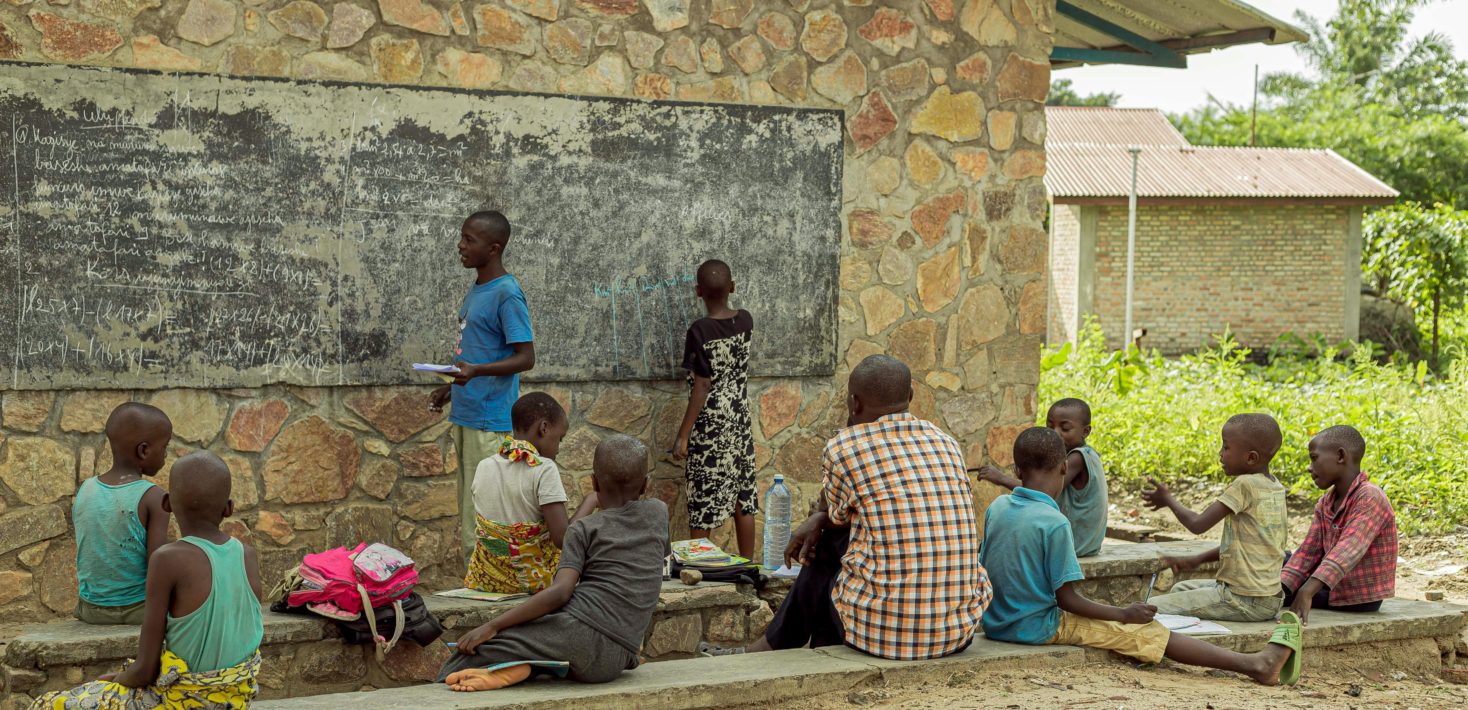


I recently visited an Arid and Semi-Arid Land (ASAL) county and spoke with a teacher from a day secondary school. What I experienced will forever be ingrained in my memory. I wondered how and why the only secondary school in a sub-county would have a dismal performance with a mean score below 3 in the national examinations, while similar day schools performed well in the 2025 Kenya Certificate of Secondary Education (KCSE) examination.
Imagine a learner having to walk for over two hours to school, probably on an empty stomach due to extreme poverty. The school lacks laboratories, power, and enough teachers, which makes it difficult for learners to keep up with the curriculum. These circumstances, coupled with understaffing of teachers in such hardship counties, directly contribute to low learning outcomes. The lack of power leaves schools in marginalised counties unable to offer a practical pathway to science education, as learning outcomes are directly affected by lessons taught only theoretically. Despite the Rural Electrification Program expanding to a national reach, some schools have yet to be prioritized.
Considering that government capitation funding to schools is done uniformly without factoring in the unequal contexts of learners in marginalised ASALs. For example, schools in marginalised counties that lack power, laboratories, enough classrooms, and enough teachers receive the same per-learner allocation as well-funded urban schools. This indicates systemic inequality in Kenya’s rural public schools.
Articles 43 and 53 of the Kenyan Constitution guarantee every child free and compulsory basic education, and a recent analysis of the school budget and the People’s Audit Report by TISA shows that the right to quality education is undermined by budget decisions that disadvantage poor, rural, and marginalized learners. In Financial Year 2025/26, the primary education budget was reduced by Ksh 2.8 billion, and the national school meals program was cut by Ksh 600 million, directly affecting children from already marginalized communities across different counties. For free-day secondary education, it dropped by Ksh 3.9 billion, and the quality assurance and assurance standard budget had no development budget over the years to monitor school learning conditions in marginalised areas. This explains why many schools in Kenya remain unequipped and underfunded.
The Grade 10 transition has created tension among parents and exacerbated these inequalities, as the Competence-Based Curriculum (CBC) ignores the lack of labs, power, internet access, and teacher shortages in most marginalized rural schools. As a result, underfunded and unequipped schools lack the capacity to offer pathways in rural areas, thereby excluding learners from science, technology, and track pathways. These outcomes undermine the
The Basic Education Act obligates the government to provide adequate, high-quality learning infrastructure for all school-going children in Kenya. All these inequalities point to discrimination by design as the schools’ financing models disregard learner context, the Rural Electrification Program bypasses schools, parents are forced to dig deeper into their pockets, and teachers’ welfare is not considered.
As we await the Budget Policy Statement from Kenya’s Treasury this month, we must all ask pertinent questions and participate in the budget-making process at the national and county levels to help curb inequality in the education sector. We must all seek clarity as to why senior school allocations are not explicitly outlined in FY2025/26 and why they remain merged with secondary school budgets, despite the ongoing transition from junior to senior schools.
Stakeholders must examine how curriculum development funds in FY2024/25 were used beyond material design and evaluate the targets for FY2025/26 before approving the FY2026/27 budget. Equality in education can only be achieved when public finance is used as a tool for dignity, shared values, and sustainable national development. The government, through the Ministry of Treasury, Education, Energy, and all stake-holders must prioritize budget transparency and accountability, equitable distribution, and program alignment to ensure that no learner is left behind in access to quality education in Kenya.
Nellie Chepkemoi is an Amnesty International Kenya Equality and Antidiscrimination intern and writes in her personal capacity.