


Does the midnight detention, interrogation, and dawn deportation of a senior staff member from one of the world’s largest philanthropic foundations signal an early tactic in the Kenyan government’s playbook for the 2027 General Elections?
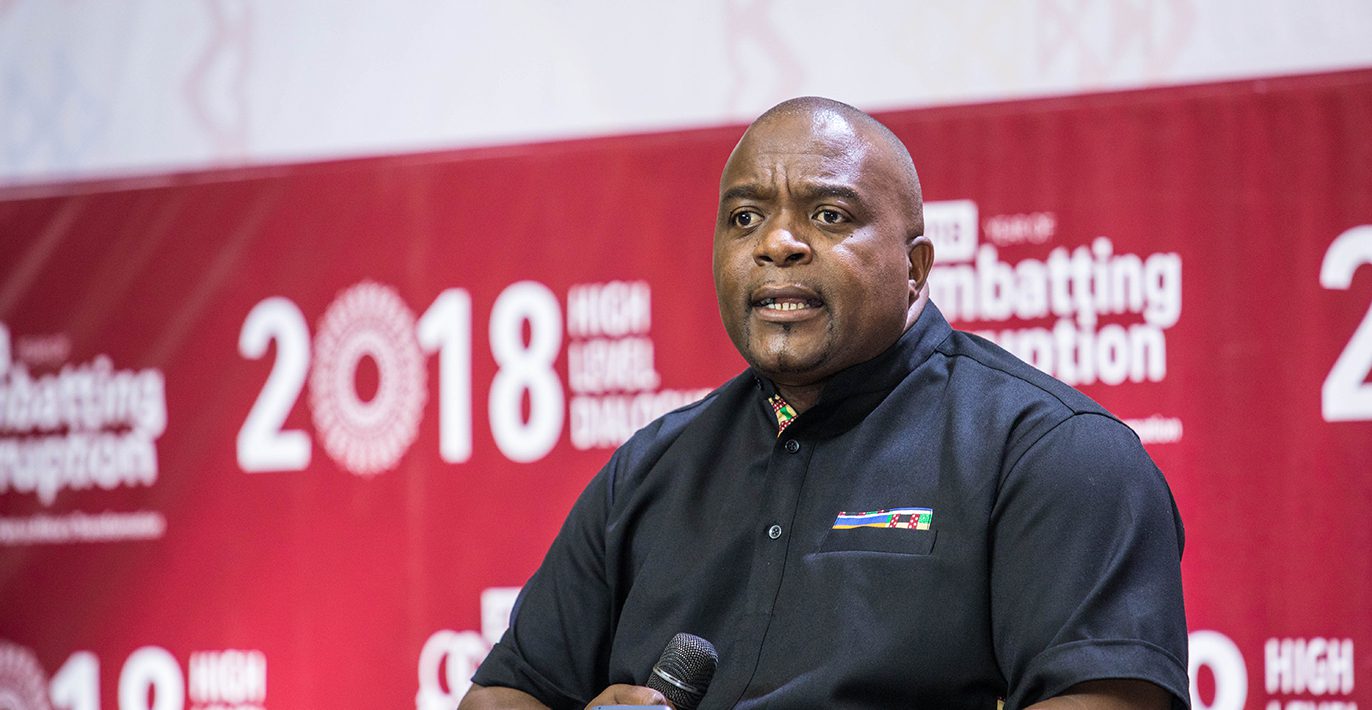
Last week’s column explored the use of INTERPOL red notices to restrict cross-border movement. One day later, Brian Kagoro, Managing Director of Open Society Foundations Programmes and a frequent visitor to Kenya for nearly 30 years, was stopped and denied entry at the capital’s international airport. His gadgets were confiscated. He was held and interrogated for ten hours before being deported back to Johannesburg the next morning.
Neither the Directorate of Immigration Services nor the Interior Ministry has yet to publicly clarify the reasons for his summary deportation. Newspaper reports citing unnamed government sources have outlined his ordeal by National Intelligence Services agents who argued he was at the centre of a massive financing assistance programme to fund another round of public protests.
The Open Society Foundations have since condemned Kagoro’s detention and return under Section 54 of the Kenya Citizenship and Immigration Act as arbitrary and unprocedural. The Section covers offences related to forged travel or identity documents, which did not apply in Kagoro’s case. They categorically deny media reports that their funding is designed to reignite Gen Z Street protests, arguing that they only fund lawfully registered non-governmental organisations and government agencies.
The incident has made international and national media headlines, with a chorus of condemnation from the Law Society of Kenya, the Police Reforms Working Group, Zimbabwean and pan-African civil society organisations. With a US$24 billion global budget, OSF is one of the world’s largest philanthropic foundations, alongside Mastercard, Wellcome, and the Gates Foundation. It has been funding state and non-state democratic governance, human rights, and development work in Kenya for the last 21 years.
The narrative is sadly familiar and resurrects past attempts to further restrict foreign funding to civil society. The one-party law NGO Coordination Act, introduced in 1990, granted disproportionate powers to register and control the operations of NGOs. In 2014, the Jubilee administration unsuccessfully attempted to pass a law requiring that 85 percent of foreign funding for all NGOs be diverted to a government agency. Before the 2017 and 2022 General Elections, the government instructed all foreign embassies to stop funding voter education for the IEBC and civic actors. In 2024, the Ford Foundation was openly threatened with deregistration and closure for its funding to civil society.
Restricting funding to CSOs violates several international standards. Article 22 of the International Covenant on Civil and Political Rights (ICCPR) states that the right to seek, receive, and use funding is an essential component of the freedom of association. Articles 10 and 11 of the African Charter on Human and Peoples’ Rights insist that funding limitations must be proportionate and lawful, not broad, vague, or punitive.
By invoking vague national‑security claims to penalize funders, Kenya has violated the UN Human Rights Council’s Principles on Freedom of Association, a body on which it currently sits. The recent incident also further cripples the Kenya Kwanza manifesto and several consistent domestic and international Presidential pledges to create an enabling environment for the press and civil society organisations.
To avoid sliding further towards the political and legitimacy crises now engulfing Tanzania and Uganda, Kenya must ensure its immigration and security laws are not weaponised to obstruct human rights work or choke off access to funding. As the country heads toward the 2027 elections, the Government must respect the rights to freedom of association, expression, and movement in line with Kenya’s constitutional and international obligations. Civic space and human rights defenders must be protected against increased restrictions and arbitrary harassment.
If Kagoro’s treatment earlier this week was not troubling enough, revelations that the Interior Ministry has been handing out Kenyan passports like lollipops to individuals publicly linked to RSF war crimes in Sudan and transnational money‑laundering schemes have left many Kenyans deeply embarrassed.
Can we fall any further? Will heads roll? Let’s see.
Irũngũ Houghton is Amnesty International Kenya Executive Director and writes in his personal capacity. Email: [email protected]