
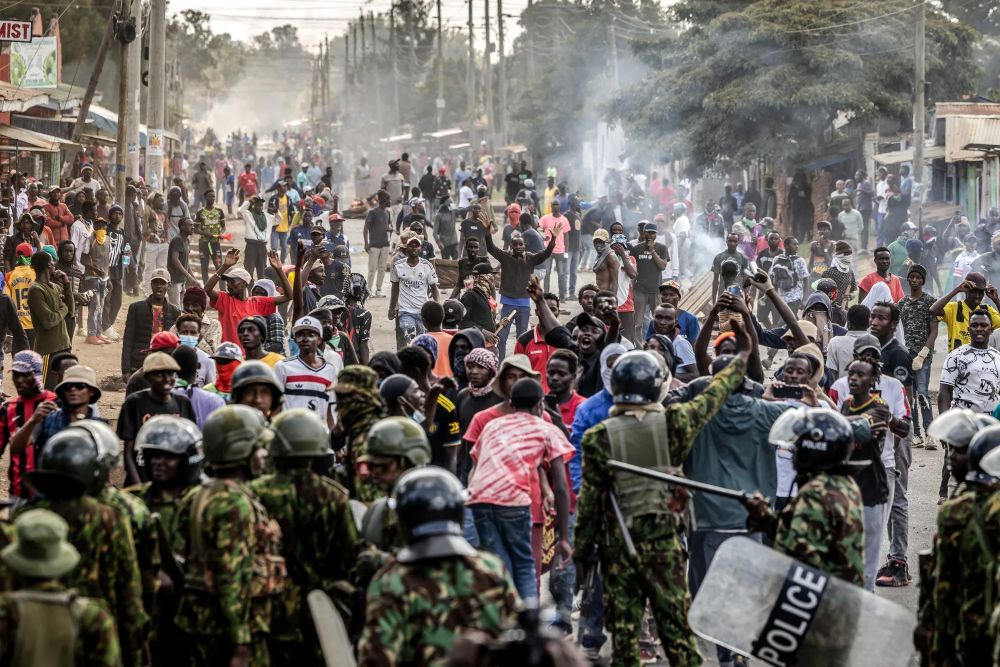



NAIROBI, 10TH AUGUST 2026: Odipo Dev and Amnesty International Kenya (AIK) have released a report documenting a sharp rise in protests across Kenya, continued use of live ammunition and the high number of arrests and injuries during protests, signaling a deepening human rights and governance crisis. The Kenya Freedom Index documented 1,292 protest events across the country between January 2025 and June 2026. Of these, 839 occurred in 2025, while 453 were recorded in only the first six months of 2026. This represents a 29% increase in protests during the first half of 2026 compared with the same period in 2025.
“The figures reveal a country in which people are repeatedly taking to the streets because their economic, social and political concerns are not being adequately addressed. The state’s response must not be repression. Kenyans have the right to protest peacefully, to express dissent and to demand accountability without facing unlawful violence, arbitrary arrest or death,” said Odanga Madung, Odipo Dev Co-Founder.
Economic grievances remained the leading driver of protests in both years. In 2025, protests were largely linked to labour disputes, pay and poor working conditions. During the first half of 2026, price increases, particularly fuel price hikes, became a major trigger. Concerns relating to food, housing and education remained among the most significant social freedoms motivating protests.
The national government was the largest target of protests in the first half of 2026, with 183 documented events, almost matching the 184 events recorded during the whole of 2025. Residents and community groups continued to form the backbone of the protest movement, while students remained one of the most organised and recurring groups.
Peaceful marches remained the most common form of protest. However, the documented increase in road blockages and other disruptive actions coincided with growing economic and social grievances and may indicate increasing frustration with official responses.
“The right to peaceful assembly is protected under Kenya’s Constitution and international human rights law. Authorities must facilitate and protect peaceful protests, not treat legitimate dissent as a security threat. Any use of force must be lawful, necessary and proportionate, ” said George Morara, Amnesty International Kenya Executive Director.
Deaths, injuries and arrests
The human cost of unlawful use of force by police during protests has been severe. In June and July 2025, the deadliest protest period covered by the Index, 65 deaths were recorded by the Independent Policing Oversight Authority (IPOA). The Kenya National Commission on Human Rights (KNCHR) separately recorded 19 deaths on 25 June 2025 and 38 deaths on 7 July 2025.
On 25 June 2025, KNCHR recorded 531 injuries, while IPOA recorded 195 injuries on the same date. A further 146 injuries were recorded by IPOA on 7 July 2025.
Arrests also reached alarming levels. IPOA recorded 760 arrests on 7 July 2025, the peak single-day arrest figure for 2025. In 2026, the anti-fuel-hike protests on 18 May produced the highest single-day arrest count recorded so far, with 348 arrests reported by the Ministry of Interior and National Administration and 710 by the Directorate of Criminal Investigations. A further 355 arrests were reported on 25 June 2026.
In the first six months of 2026 alone, police dispersals reached 77% of the entire 2025 total, while arrests reached 73% of the 2025 total. School closures and official assurances or commitments also increased during the period.
Police use of force
Teargas was the most frequently documented weapon used by police during protests in both 2025 and the first half of 2026. Live ammunition was the second most frequently documented weapon in both periods.
The continued documentation of live-bullet use in crowd-control situations raises serious concerns about policing practices and compliance with national and international standards on the use of force. Lethal force may only be used when strictly necessary to protect life from an imminent threat of death or serious injury. It must never be used to disperse a protest or punish dissent.
Odipo Dev and Amnesty International Kenya call on:
- The Kenyan government to respect, protect and facilitate the rights to freedom of peaceful assembly, expression and association;
- Inspector General of Police to issue clear instructions to all security agencies that peaceful protesters must not be arbitrarily arrested, beaten, threatened or subjected to excessive force;
- Inspector General of Police to ensure that police use force only where lawful, necessary and proportionate, and prohibit the use of live ammunition against protesters except in strict compliance with international law;
- The Independent Policing and Oversight Authority (IPOA) to conduct prompt, independent, impartial and effective investigations into all deaths, injuries, allegations of torture, unlawful use of force and arbitrary arrests linked to protests;
- Office of the Director of Public Prosecutions (ODPP) to carry out investigations and prosecute officials and other individuals suspected of criminal responsibility, regardless of rank or position in accordance with their statutory independence and mandate;
- KNCHR to ensure that victims and families receive truth, justice, reparations and guarantees of non-repetition;
- Inspector General of Police to release anyone detained solely for peacefully exercising their rights, and ensure that all detainees have access to lawyers, families and medical care;
- IPOA to publish comprehensive and disaggregated data on protest-related deaths, injuries, arrests, detentions and police use of force; and
- President Ruto’s administration to urgently address the underlying economic and social grievances driving protests through transparent, inclusive and meaningful public participation.
The Kenya Freedom Index dataset was compiled through automated and manual searches of media and YouTube reports, followed by human review and deduplication. Data on deaths, injuries and arrests were sourced from IPOA, KNCHR and Amnesty International Kenya. The figures should therefore be understood as documented incidents and may not represent the full scale of protest activity or related violations.
END
For interviews and further information, please contact: Mathias T. Kinyoda, Email: [email protected], Mobile: +254 786 725 434
Explore the full Kenya Freedom Index: freedomindex.amnestykenya.org