



JOINT STATEMENT FOR IMMEDIATE RELEASE
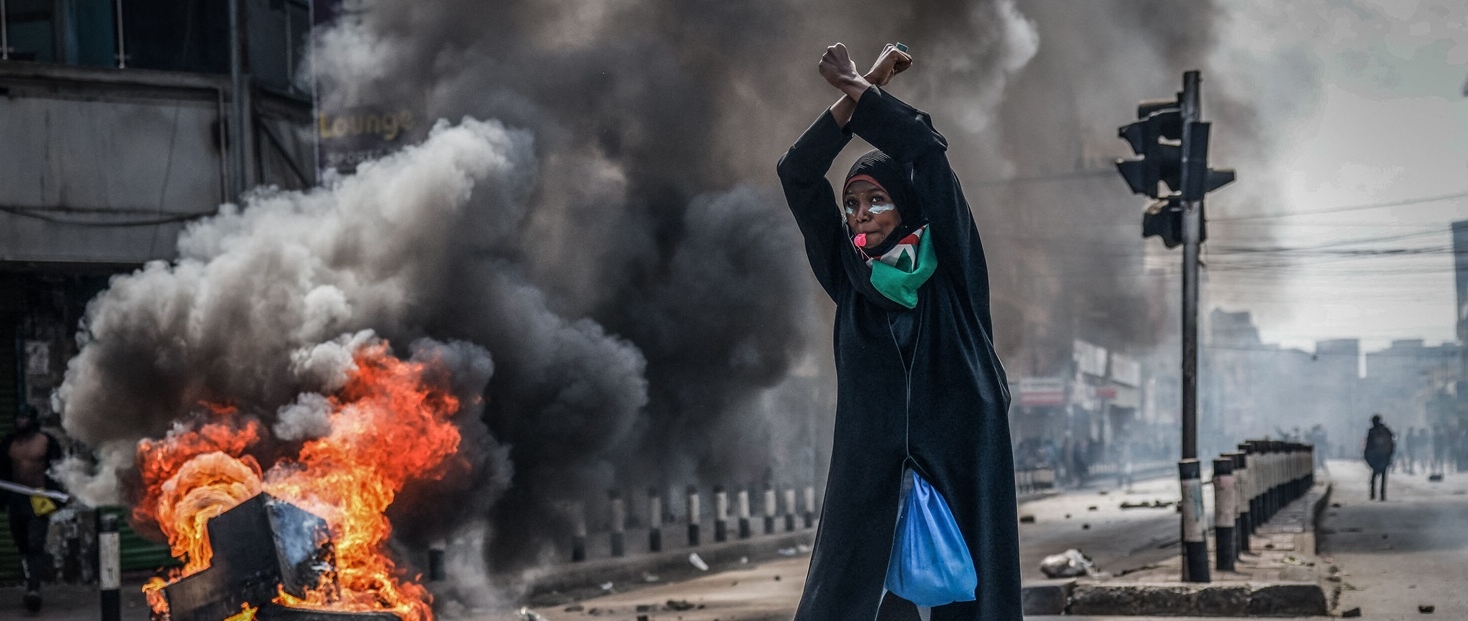
Nairobi, Friday, May 21, 2026: As fuel protests grip the country, Odipo Dev and Amnesty International Kenya have released the Kenya Freedom Index. The Kenya Freedom Index is the first public platform that empirically tracks violations of the constitutional right to peaceful assembly. Analysing 1,002 protests from 2020 to 2025, the Kenya Freedom Index paints a stark picture. Driven by economic hardship, political grievances and environmental concerns, demonstrations have more than doubled in the past two years and have increasingly met with unlawful force.
“Contrary to popular perception that protests are organised by NGO activists, community residents have organised the most protests (360), followed by workers (235), young people (171), students (98) and civil society organisations (63) among others. At 452 protests, economic freedom concerns top every other category. This is more than political discontent, social issues and more than every other grievance combined. Nairobi is responsible for 29%, followed by Nakuru (5%) and Mombasa (4%)”, says Odipo DEV Executive Director Felix Kosgei.
Over 30% of the 1,002 protests (389) were dispersed by police using tear gas canisters. The Freedom Index statistically documents 138 deaths, 1,227 injuries and 2,128 arrests over the last five years. The figures reveal a disturbing trend of arbitrary arrests, pre-trial detention, excessive charges and intimidation increasingly being used to suppress dissent. Most demonstrations have targeted the national government followed by county administrations and then security agencies.
As the nation inches towards the second anniversary of the June 2024 Gen Z protests and next year’s General Elections, the organisations insist the National Government and National Police Service respect, protect, and fulfil the right to peaceful assembly, in line with Article 37 of the Constitution and international human rights standards.
“We must see an end the use of excessive and unlawful force, including the use of live ammunition against protestors. There must be accountability for all unlawful killings and injuries committed during protests,” says Amnesty International Kenya Executive Director Irũngũ Houghton.
The Kenya Freedom Index findings offer a strong argument for the review of laws, policies, and policing practices to facilitate, rather than criminalise, peaceful assembly. Data collection and transparency on protest-related incidents, injuries, and deaths must be strengthened. The Government of Kenya must address underlying grievances driving protests, particularly economic and governance concerns
“The Kenya Freedom Index comes at a critical moment. This week, 17 Kenyans were killed in Nairobi (4), Naivasha (4), Kiambu (3), Busia (3), Thika (2) and Nakuru (1) as Kenyans took to the streets over soaring fuel prices. In just one month, the nation will mark the second anniversary of the storming of the National Assembly. As the 2027 electoral political campaigns pick up, this Index offers a statistical resource for all those that seek to reduce the levels of violence, ensure accountability and facilitate the constitutional right to peaceful assembly”, says VOCAL Africa Executive Director Hussein Khalid.
Link to the Kenya Freedom Index: https://freedomindex.amnestykenya.org/
Signed
| Irungu Houghton Amnesty International Kenya Section Director | Felix Kiprono Odipo Dev Director | Hussein Khalid VOCAL Executive Director |
For more information and interviews, contact Mathias T. Kinyoda. Mobile: +254 786 725 434 |
Email: [email protected]
NOTES ON THE KENYA FREEDOM INDEX
- The data in the Kenya Freedom Index was obtained through a systematic mapping of protest events as reported by state, civic, and news media agencies. Among them were the Interior Ministry, National Police Service, Kenya National Commission on Human Rights, the Independent Policing Oversight Authority, members of the Police Reforms Working Group, ACLED, and Kenyan and international media houses, among others.
- The Kenya Freedom Index is guided by a working definition of a protest as “a collective, public act, involving one or more people physically present together, that expresses disapproval of or objection to a policy, institution, authority, or condition”. To ensure consistency and traceability, data was gathered month by month using advanced online search techniques. The primary search terms used were “protest” and “demonstration” because these appeared most consistently across news reporting on civic actions, public gatherings, and organised expressions of discontent.
- Where available, protest locations were identified through direct references in the news articles. It was not possible to geotag or report all protests with precise geographic coordinates. In such cases, the nearest identifiable location, such as a constituency, sub-county, or another recognisable administrative area, was used. Coordinates were then assigned based on these approximated locations for mapping purposes.
- For each documented protest, we aimed to identify whether there was any official response from authorities or public institutions. Some protests did not elicit any official response at the time the stories were published. In such cases, the dataset reflects the absence of available responses rather than assuming that none occurred.
- Certain protests took place over multiple days, making it difficult to capture exact start and end dates with precision. For these cases, reported timelines were used as faithfully as possible, although discrepancies in reporting styles across media outlets remain a known limitation.
- Protests were organised into categories based on the issues, groups, or grievances reported in the news stories. Some protest groups overlapped in membership, themes, or organising bodies. In such cases, the dataset prioritises accurate representation of each protest as reported, rather than enforcing rigid group boundaries.
- Got suggestions on how we can improve the Freedom Index? Email us [email protected].