


The opening Article of the historic Universal Declaration of Human Rights (UDHR) of 1948 boldly states that ‘‘All humans are born free and equal in dignity and rights’’. This statement is both profound and powerful because it establishes a solid foundation upon which every individual can claim and defend their rights. Subsequently, as citizens of the world, we share a collective civic duty to preserve this extraordinary vision of the 77-year-old global framework, which unequivocally articulates the rights and freedoms to which every human being is equally and inalienably entitled.
Undoubtedly, human rights don’t belong only to lawyers, courtrooms, or legislators. We all have a duty in this mission.
Over the years, through the persistent efforts of individuals, communities, and movements, human rights have steadily advanced worldwide, making them a lived reality for many. These hard-won gains must be safeguarded, ensuring that the coming generations are empowered and actively take up the mantle to continue the struggle of advancing human rights.
Should it matter to me as an ordinary citizen to care about these rights when various organs are in place to ensure that I enjoy them?
During the 1948 declaration, not only did the nations of the world acknowledge to uphold and defend these rights, but they also agreed that human rights were everyone’s business. Despite the passing of the UDHR, human rights abuses have persisted because of systemic and retrogressive practices that compromise the promises of this landmark declaration.
A decade after the UDHR, Peter Benenson, an English lawyer, was enraged by an article about how two Portuguese students had been arrested and sentenced to imprisonment for drinking a toast to liberty in a Lisbon restaurant, as citizens continued to face persecution for exercising their rights and freedoms. Mr. Benenson’s flair for controversy and activism had become evident at an early age when he lodged a complaint with his school’s headmaster about the quality of the food. This act prompted a letter to be sent to his mother warning of her son’s “revolutionary tendencies”. Deeply moved by the Lisbon incident, he felt compelled to act against ongoing injustices. This led him to publish an article, “The Forgotten Prisoners,” sparking a global letter-writing campaign supporting those facing unfair persecution. Thousands joined, and the movement eventually gave rise to Amnesty International.
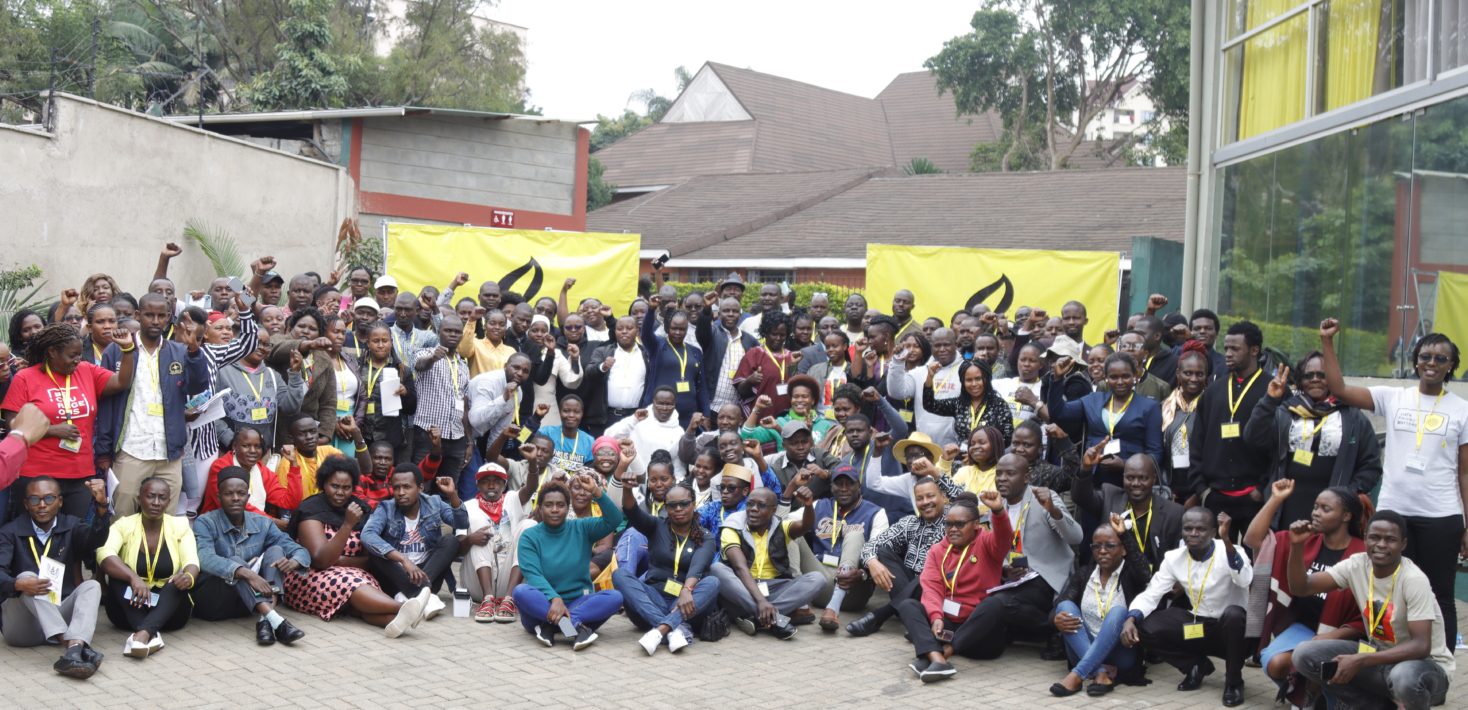
64 years on, Amnesty International, a global movement for human rights, has continued to mobilise, organise and empower its members and supporters to take action for human rights all across the world.
Movements are powerful. They shape belief and collective action to drive change. People-powered movements historically have proven capable of uprooting the most entrenched systemic injustices and practices, influencing legislation, and toppling dictators through the collective force of people who stood firm for their liberation. That’s the power of collective action.
At a recent Feminist Dialogue hosted by the Nobel Women’s Initiative, three female Nobel Laureates came together to highlight how individuals can advance human rights through collective action. I had the privilege to take away a statement from Nobel Laureate Oleksandra Matviichuk (Ukraine-2022), who in her own words as an experienced human rights lawyer in a war-torn Ukraine whenever faced with lowest of times had this statement propelling her passion to support humanity: “In places where you cannot rely on legal instruments to realise human rights, rely on the people.” As Oleksandra reminds us, when laws fail to protect, the power to defend rights lies with the people. This is truly the heartbeat of human rights activism, where ordinary citizens move to take extraordinary action to stand in the gap and make justice a reality.
If you believe in the power of individual and collective action and in making human rights everyone’s business, then there is a place for you in our Movement.