


This comparison with Haiti is not a prediction that Kenya will follow the same path. Kenya has its own history, institutions and political realities. But Haiti offers a sobering lesson about the consequences of institutionalising political violence.
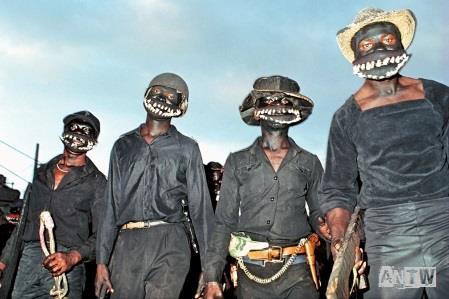
In 1959, Haitian dictator François “Papa Doc” Duvalier established a force that became known as the Tonton Macoute. Formally known as the Volontaires de la Sécurité Nationale. The organisation operated as a paramilitary force and instrument of political repression.
Similar to what we are witnessing today in Kenya with the growing “goon” culture, its members were used to intimidate and persecute opponents, enforce loyalty to the regime and spread fear among the population. The group became associated with disappearances, killings and other serious human rights abuses.
The Tonton Macoute was not simply a group of criminals operating outside politics. It was a stark example of how political power can cultivate, legitimise and exploit organised violence.
The lesson is particularly relevant to Kenya because political violence rarely remains confined to the original purpose for which it was mobilised. Political actors may initially believe they can control violent groups. They may recruit them to disrupt an opponent’s meeting, intimidate critics or secure an electoral advantage. But violence creates its own incentives.
Groups that acquire organisational structures, networks, weapons, money and influence may eventually pursue interests beyond those of the politicians who first mobilised them. They can become brokers of fear, extortion and coercion. Haiti’s experience illustrates the danger of allowing political enforcers to become entrenched in public life. The Tonton Macoute survived the death of Papa Doc in 1971 and continued under the Duvalier dynasty. Even after the Duvalier regime fell in 1986, the legacy of armed political networks and impunity did not simply disappear.
For Kenya, the message is clear: political parties and leaders cannot treat violence as a temporary campaign resource. Once violence is normalised, it becomes harder to contain. The remnants and blueprint of the Tonton Macoute are directly visible in the gangs that heavily control parts of Haiti today. While today’s gangs are structurally distinct, historians and political scientists view the Tonton Macoute as the historical archetype that birthed Haiti’s modern gang crisis. While today’s Haitian gangs have become vastly more decentralised and heavily armed via international arms trafficking, their operational logic remains the same. They are the fragmented descendants of a state-engineered system that weaponised the civilian population against itself.
Kenya’s Constitution establishes the rule of law, equality and the protection of fundamental rights. These principles cannot be suspended because an individual is politically connected, because a gathering is associated with an opposition party, or because a young person is labelled a “goon”.
The responsibility for ending impunity lies not only with the police. Prosecutors, courts, political parties, electoral institutions and the political leadership all have a role to play. Those who plan, finance or direct violence must be investigated and, where there is sufficient evidence, prosecuted through fair legal processes. Those who commit abuses must not be shielded by political affiliation. Equally, no one should be convicted or punished merely because of an allegation or association. Accountability must be evidence-based, impartial and independent.
The story of the Tonton Macoute is a reminder that political violence can outlive the politicians who create it. It can embed itself in institutions, communities and economies, leaving generations to confront the consequences. Kenya does not have to follow Haiti’s history. But avoiding that path requires confronting the danger before it becomes irreversible. The growing concern over muggings and insecurity, the reported use of organised groups in political disputes, and the weakening of public trust in institutions must not be treated as unrelated problems. They are reminders of the fundamental obligation of the state to protect people, uphold the rule of law and ensure that every person can live with dignity and without fear.