


Kisumu High Court’s 25 March judgment this week, awarding Sh 38.6 million to 28 victims and families, validates their long-ignored cries for justice. It confirms what human rights organisations, opposition politicians, and the media have extensively documented. Police violence during the 2023 “Sufuria” protests was deliberate, excessive, and brutally unlawful. What implications does this ruling have for the victims and the path to reparations and justice for all whose rights are violated while exercising the right to expression and assembly?
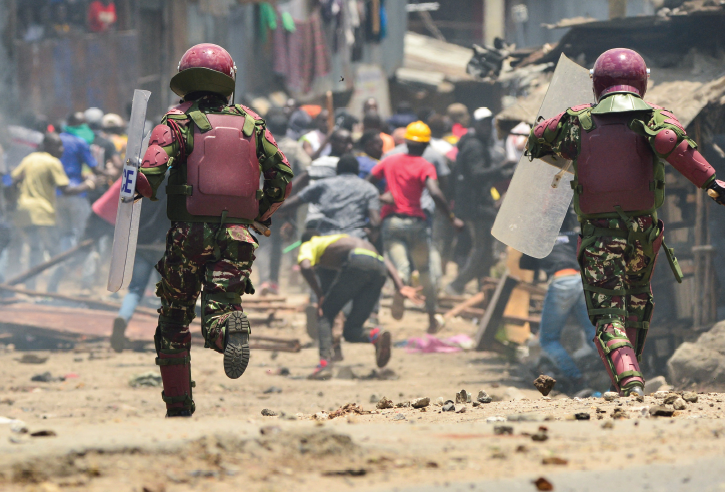
Imagine coming back from work, walking to dinner, or being in your home when chaos erupts around you without warning. Uniformed police officers in full riot gear kick down gates, storm into your home, drag you and your neighbours outside, and repeatedly beat you with batons and boots. In the streets, officers chase unarmed civilians, fire live bullets at children running for safety, workers returning home, teenagers playing football, and commuters on motorbikes.
Shot in the chest, abdomen, legs, or face, you watch people you know collapse, bleeding, unconscious, and calling for help with no medics or safe place to run to. Tear gas airborne, families begin the desperate search for the missing. Hours later, you find them in overcrowded wards with shattered bones or cold and still in mortuaries. Patients writhe in pain from fractured jaws, collapsed lungs, torn intestines, amputated toes, and broken limbs.
Days later, families and human rights monitors return to find several have died. When you try to report what happened, police stations turn you away, and IPOA tells you its systems are down. Years later, these memories remain. How did an ordinary day become a nightmare at the hands of those paid to protect you? More importantly, when will such brutality finally end?
Twenty-one survivors and seven bereaved families from attacks between 27 March and 21 July 2023 stopped asking questions. They went to court to demonstrate that unlawful and excessive police force led to deaths, serious injuries, and violations of their fundamental rights. They proved beyond a reasonable doubt that the Police Inspector General was responsible for the conduct of officers under his command, despite failing to produce the operational documents to the court that should have guided police behaviour. Further, IPOA should have urgently investigated the killings and injuries.
The High Court has ordered the Attorney General to award the 28 petitioners a total of Sh 38.6 million. Families will receive between Sh 910,000 and Sh 1.4 million, and injured survivors up to Sh 4.87 million. Under the supervision of the Kenya National Human Rights Commission and IPOA, the Interior Ministry must now develop clear regulations for managing public assemblies and police use of force. The court shall resume on 7 July to confirm compliance.
Justice Alfred Mabeya must be commended for concluding the case within two years. It sets a new judicial standard. Rallied by the Law Society of Kenya Kisumu Chapter, the verdict also owes much to the KNCHR, Katiba Institute, International Justice Mission, and Amnesty International, who provided detailed affidavits, and the County Government of Kisumu, which provided access to medical officers and records.
The Kisumu Sufuria Maandamano judgment is one of the most important protest‑policing decisions in recent years. It affirms that working‑class Nyalenda, Nyamasaria, and Kondele neighbourhoods deserve the same protection during protests as wealthier Milimani and Riat. Five minors were shot or beaten, nine victims were under 35, but none were found to be violent. Men were the primary targets, but women bravely searched for loved ones, cared for the injured, and pushed for justice.
While compensation is yet to be settled and it is less than awards in civil cases, this judgment sets a critical precedent for accountability and equal protection during public assemblies. Settlements must not be delayed. Investigations into the culpability of specific officers and commanders must be concluded. May this ruling act as a stiff deterrent against recurrence as the Police Services prepare for the 2027 General Elections.
Irũngũ Houghton is Amnesty International Kenya Executive Director, and Dorcas A. Oluoch is LSK Kisumu Chapter Chairperson. They write in their personal capacities.