
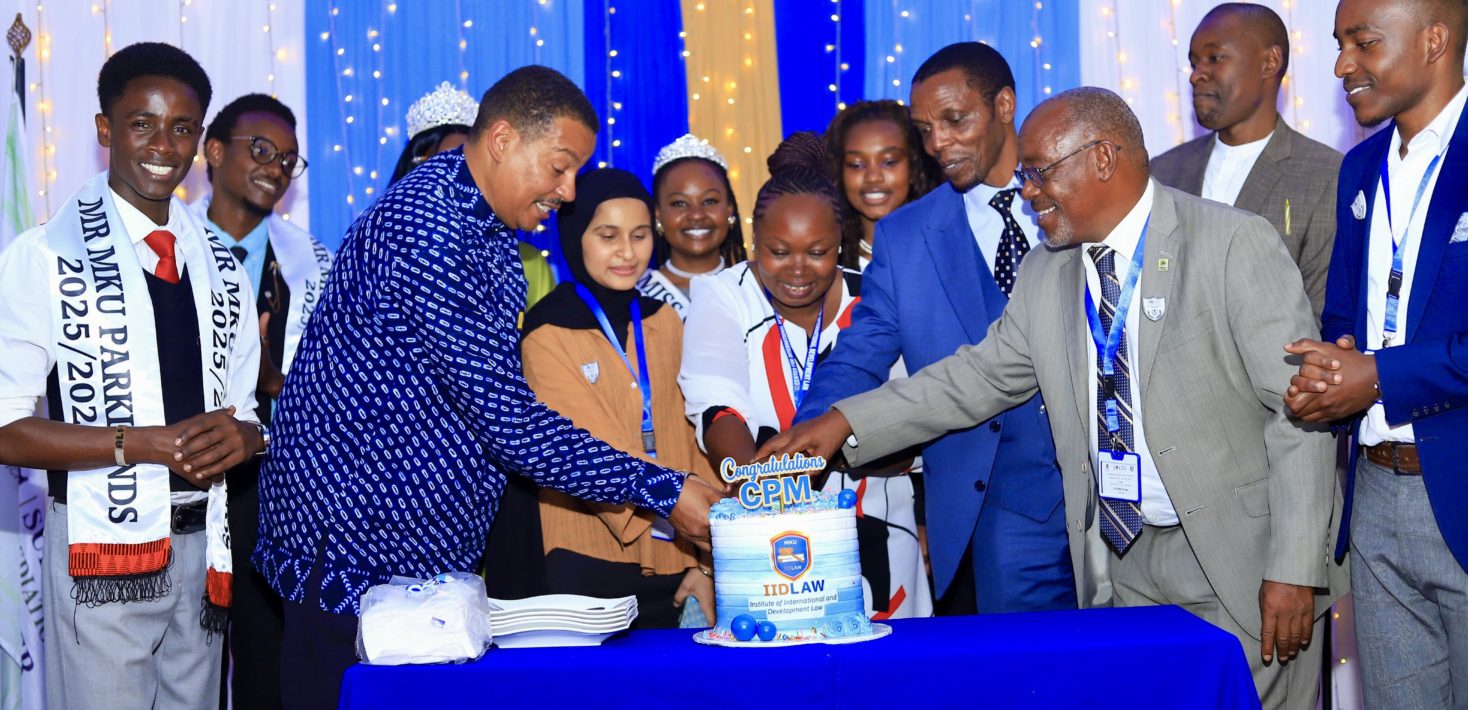


Distinguished faculty, honored guests, and graduating students. It gives Amnesty International Kenya great pleasure to celebrate your achievement and step towards being professional mediators. As you graduate, I invite you to reflect on mediation as a pathway to accountable, rights-respecting communities.
Mediation is the science of building bridges. It is also the art of finding common ground in the presence of conflict. While a powerful tool for peace, it is also a powerful tool for justice and accountability.
Across Kenya and the world, we have seen families torn apart by greed and sometimes need. Girls and women left out of succession and separation agreements. Children violated for a small piece of land. Intimate spouses killed because the cost of a fault-based divorce is too high. Business owners who have committed suicide because they cannot find a way past “pending bills” or excessive taxes. Pastoralists killed by farmers for trespassing pasture. Communities differentiated by ethnicity targeted for extinction.
Mediation is not just peacebuilding and reconciliation. When mediators prioritize expediency over truth, you risk legitimizing impunity. When you, as graduates and future advocates, judges, and mediators, turn away from accountability, you betray the very essence of justice. So, what does it mean to integrate human rights into mediation?
Center the Victims: Every negotiation must begin by asking, who has suffered? What do they need to heal? Justice is not a footnote. It is the foundation for transformative mediation.
Challenge Power Imbalances: Mediation is not neutral when remaining neutrality favours the powerful. Your role is to ensure that the voices of the marginalized are not drowned out by those who caused harm and have a louder voice.
Insist on Truth and Transparency: Agreements that bury the truth sow seeds of future conflict and resentment. Truth-telling is not optional. It is essential for reconciliation.
Build guardrails for future impunity: Accountability mechanisms, whether courts, truth commissions, or reparations, must be part of every settlement. Without them, peace becomes a pause, not a resolution.
As you leave this hall, remember that mediation is not just a set of marketable skills or a career; it is a calling. Learn to proactively exist loudly in a world where disagreements and conflicts test us daily. A world where compromises will tempt your conscience. Let human rights be your compass always.
Consider that Infant Amanda, fifty-six-year-old widow Zainabu Shiunzi, Citi-Bank vice President Marianne Kilonzi of London, engineer and contractor Hannington Raburu of Kisumu, and women human rights defender Elizabeth Ekaru might be alive today if mediators and a culture of respect for human rights had been present.
Mediation is not avoiding hard truths. It is about confronting them with wisdom and compassion. It is about building pathways through tensions that are just, dignifying and uplifting all concerned.
Congratulations, graduates. May you be the generation that proves that peace and accountability are not opposing forces, but partners in the pursuit of human dignity and rights
Thank you.
By Amnesty International Executive Director Irũngũ Houghton
Professional Mediation Trainees’ Graduation Ceremony
Mount Kenya University-Institute of International and Development Law
Tuesday 2 December 2025