


Overview
Welcome to this edition of the Amnesty International Kenya Gazette. In August, we celebrated young voices reimagining a safe and inclusive digital future, honoured journalists who dared to speak truth to power, and stood in solidarity with survivors of gender-based violence and families of those lost to extrajudicial killings. We share stories of Kilifi’s elders living in fear, the national outcry against femicide, and the ongoing demand for accountability in the Ahmed Rashid case. We also reflect on our 4th Annual Delegates Conference, where members renewed our leadership and direction. Each story is a reminder of our mission—to protect, defend, and advance the rights of all in Kenya.
In this issue
- Celebrating Bold Digital Voices
- Honouring the Legacy of Joseph Kamau Kanyanga (KK)
- Kilifi’s Forgotten Elders, a Crisis of Fear and Injustice
- Maskani, Confronting Femicide through Art
- Defending Justice in Times of Protest
- Calling Out Inaction on Child Sex Trafficking
- Our First Virtual Annual Delegates Conference
- Update on the Ahmed Rashid Case
JOIN THE MOVEMENT
BECOME A MEMBER TODAY
Join the Fight for Human Rights
Celebrating Bold Digital Voices
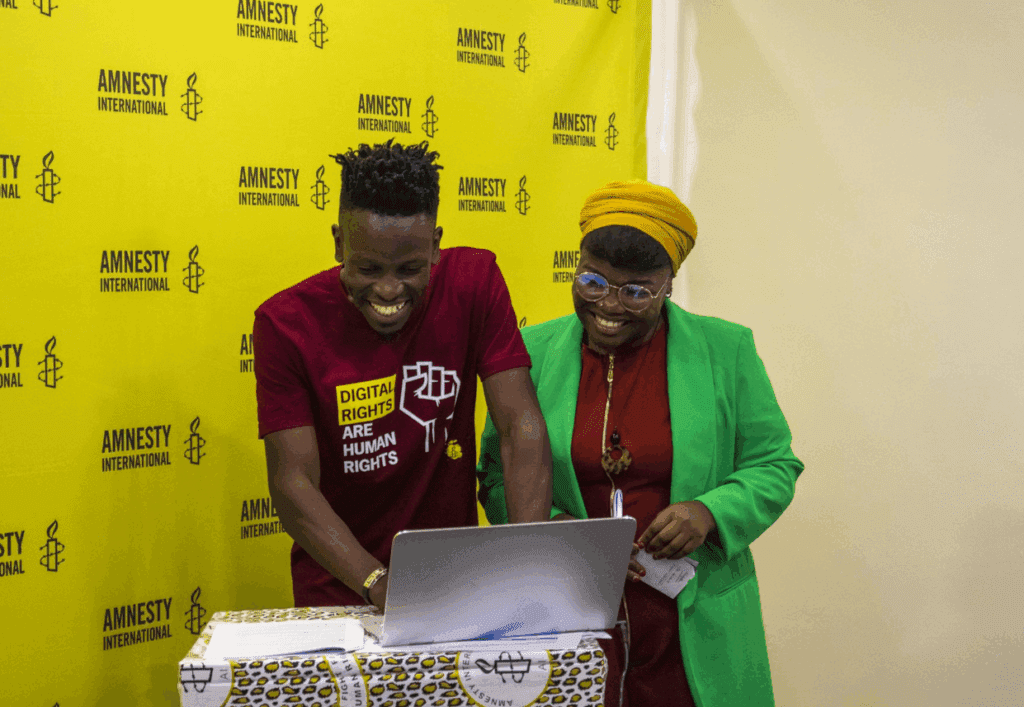
September began on a high note with the celebration of this year’s Digital Rights Essay Competition winners. The competition drew in over 1,000 young changemakers from 45 Human Rights Friendly Schools across the country, each lending their voice to the future of human rights online. Writing under the theme “The Internet We Want”, students envisioned a digital space where governments, tech companies, and communities collaborate to build an inclusive, safe, and rights-respecting online future for all. Their ideas reflected not just creativity, but also courage—proof that Kenya’s next generation is ready to lead the digital rights conversation.
From Kisii to Kajiado, Homabay to Kiambu, the very best of these voices stood out. The winners per region were: Frazier Achieng Obarah (Lake Junior School – Homabay), Ariana Mildred (Noonkiprir Girls Secondary – Kajiado), Kwamboka Joan (Suneka Girls – Kisii), Carilus Akede (St. Johns Masawa Junior – Kisumu), Perpetua Nyaboke Ombati (Nyabururu Girls High School – Nyamira), Enock Kipyegon Rotich (Kabianga School – Rift Valley), and Esperenza Hope Mbone (Senior Chief Koinange Girls – Kiambu). Each of them carried forward a message of hope: that the internet can—and must—be a place where rights thrive, not where they are eroded.
Watch
EPISODE 1 OF RIGHTOUS MADNESS
Same Script, Different Cast
Honouring the Legacy of Joseph Kamau Kanyanga (KK)
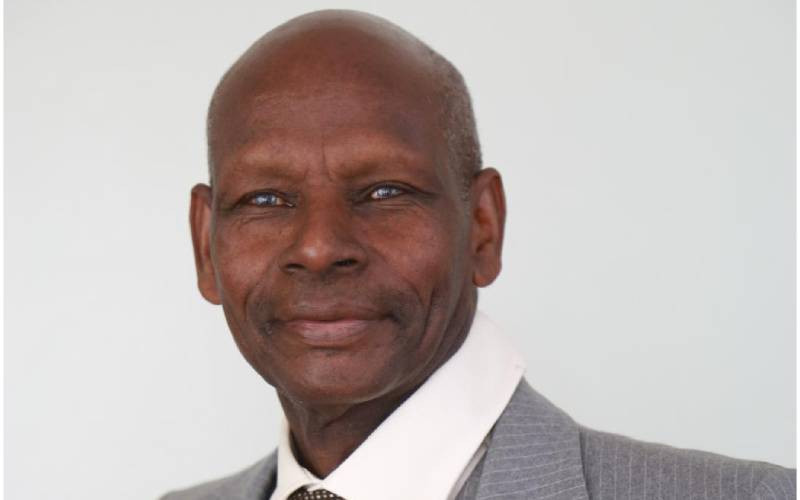
This August, we bid farewell to one of Kenya’s most fearless storytellers, veteran journalist and former Standard Group Managing Editor, Joseph Kamau Kanyanga (KK), who passed away on 28 July 2025. KK’s pen was his weapon, and in an era defined by repression and censorship under the Moi regime, he wielded it with unmatched courage. His reporting not only exposed state-sponsored political violence but also challenged the suffocating atmosphere of censorship that sought to silence critical voices. For this, he earned both deep respect and unrelenting persecution.
In 1994, KK was arrested for publishing articles critical of the government—a bold act that led Amnesty International to recognise him as a prisoner of conscience. Detained without trial, he joined countless others who bore the weight of repression for daring to speak truth to power. His work was pivotal in unmasking the political motives behind ethnic clashes in the 1990s, shattering the propaganda of tribalism at great personal risk. Today, KK’s legacy lives on in every journalist who refuses to bow to intimidation, reminding us that truth, once spoken, cannot be silenced.
ACT NOW
JUSTICE FOR EUGINE
Eugine was an only child. He was killed during violent policing of a school unrest. He died in a place where he should have felt safe.
Kilifi’s Forgotten Elders: A Crisis of Fear and Injustice
In the past three months alone, eight elderly men and women in Kilifi County have been murdered, accused—without evidence—of witchcraft. Behind these brutal killings lie family disputes over land inheritance, where greed often masquerades as superstition. In some chilling cases, hired gangs were paid as little as KES 500 to extinguish a life. These acts are not just unlawful; they are a direct assault on the right to life, dignity, and freedom from discrimination.
Yet, amid the bloodshed, silence prevails. Investigations are rare, arrests almost nonexistent—a glaring failure of the justice system to protect some of the most vulnerable in society. Elders are left with two choices: flee their homes or live under the shadow of fear. As a nation, our quiet complicity risks normalising a culture where violence replaces dialogue and where harmful beliefs, not justice, dictate who gets to live. The killings in Kilifi demand urgent action, accountability, and above all, a collective rejection of a practice that stains our shared humanity.
Maskani, Confronting Femicide through Art
This month, we were honoured to stand alongside survivors, artists, and activists at MASKAN—an installation spotlighting the harrowing reality of femicide in Kenya. Coordinated by Usikimye, a trauma-informed and survivor-centered GBV organisation, in collaboration with Creatives Garage and curated by Thayù, the award-winning multidisciplinary artist, the installation brought into sharp focus a national crisis that can no longer be ignored. In the first three months of 2025 alone, 129 women were killed—44 every month, more than one femicide a day. MASKAN asked us not to look away, but to reckon with the shoes left behind, each pair representing a life violently cut short by patriarchy, power, and male privilege.
As our Section Director, Irungu Houghton, reminded us:
Through Maskani and the shoes of 129 women we tread the terror that male privilege, power and patriarchy intentionally creates for women, men, girls and boys. But before us is not only terror and trauma, but the boils of our collective silence
Irungu Houghton, Amnesty International Kenya Section Director
The installation urged us to linger, to listen, to confront the everyday struggles of women striving for dignity and safety in all spaces. But it also challenged us to act: to dismantle toxic masculinity, to raise feminist men and boys, to create room for women’s and girls’ leadership, and to demand the full implementation of the Presidential Taskforce on Gender-Based Violence (GBV) including Femicide report. The struggle against femicide needs all of us—for only together can we build a Kenya where violence against anyone on the basis of gender or sexuality finds zero tolerance.
Defending Justice in Times of Protest
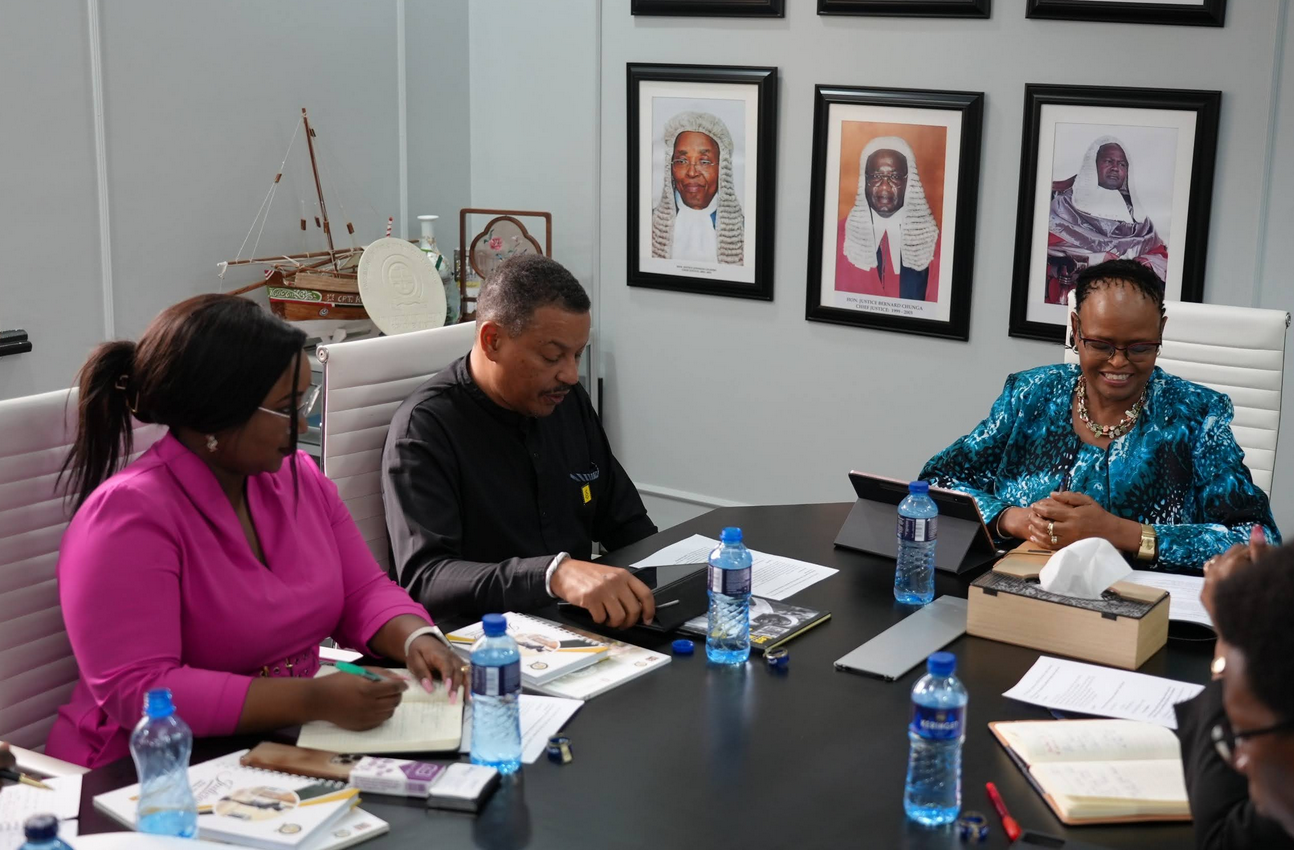
Amnesty Kenya joined fellow civil society organisations for a strategic dialogue with Chief Justice Martha Koome, reflecting on the performance of Kenya’s criminal justice system in the wake of the June and July protests. These protests, which mobilised thousands across the country, also brought into sharp relief questions of accountability, access to justice, and the state’s response to citizens exercising their constitutional rights.
The dialogue explored how civil society and the judiciary can strengthen collaboration to uphold constitutionalism and the rule of law, especially during moments of national tension. It was a reminder that justice is not an abstract ideal, but a living practice—measured in how fairly institutions treat those who speak truth to power, and how diligently they protect the rights of the vulnerable. Together, we recommitted to building a justice system that serves the people, not power.
Calling Out Inaction on Child Sex Trafficking
On 15 August 2025, Amnesty International Kenya raised grave concern over government remarks dismissing the BBC Africa Eye documentary Madams of Mai Mahiu as a “hoax.” The exposé uncovered chilling allegations of child sex trafficking, backed by evidence submitted to the National Police Service as early as March 2025. Five months later, with no substantive police action, the documentary stood as a tragic indictment of state inaction and the continued vulnerability of survivors.
By branding the documentary false, the Cabinet Secretary for Interior not only trivialised the suffering of children but also emboldened perpetrators and attempted to discredit legitimate journalism. Such denial undermines Kenya’s constitutional and international obligations to protect children from exploitation. We have therefore called on the National Police Service to launch comprehensive and transparent investigations into the crimes exposed, and on the Independent Policing Oversight Authority to probe police failure to act on credible evidence. Survivors of child trafficking deserve justice, protection, and rehabilitation—not silence and denial.
Our First Virtual Annual Delegates Conference
August marked a milestone with the close of our 4th Annual Delegates Conference (ADC)—and our very first to be held virtually. Over two powerful days, 76 delegations from Circles of Conscience gathered online to deliberate, reflect, and shape the direction of our movement. True to Amnesty’s spirit, the conference was defined by accountability, democratic process, and the collective energy of members who continue to anchor our vision of human rights for all.
In a show of vibrant leadership renewal, five new board members were elected: Odanga Madung, Carolyne Abong, Angela Mbogua, Simeon Peter Sungi, and Ebby Wanjala. We also bid a heartfelt farewell to Joram Mwinamo, Rose Mwaura, Tabitha Saoyo, Abdhullahi Abdi, Esther Njeri, and Diana Watila, whose terms came to a close. We honour their years of service, wisdom, and dedication to the movement. None of this would have been possible without our members—your commitment made the ADC a success, and your resolve assures us that the future of Amnesty Kenya is in good hands.
Update on the Ahmed Rashid Case
The long-awaited trial of police officer Ahmed Rashid—accused of the extrajudicial killing of two teenagers in Eastleigh in 2017—moved forward this month with critical testimony. Five police officers took the stand, each denying that they witnessed Rashid shoot the boys. Yet, CCTV footage presented to the court showed Rashid charging and firing at one of the youths. The evidence record was further clouded by inconsistencies: bullets collected at the scene failed to match the AK47 and Jericho pistols presented; one Jericho pistol carried a mismatched serial number; and seven cartridges linked to a Ceska pistol were never submitted for analysis.
Testimony from retired pathologist Dr. Ndegwa revealed the brutal reality—one boy shot six times, the other four times, both at close range. Chief Inspector Otieno corroborated with crime scene and post-mortem photographs. Meanwhile, the court imposed a gag order on Rashid’s defence team, including lawyer Danstan Omari, barring them from public commentary after concerns of misrepresentation of facts in daily press briefings. Victims’ lawyers have since called for Omari to be held in contempt for violating the sub judice rule. As the trial unfolds, the case continues to test the resilience of Kenya’s justice system to deliver accountability for police violence long shielded by impunity.